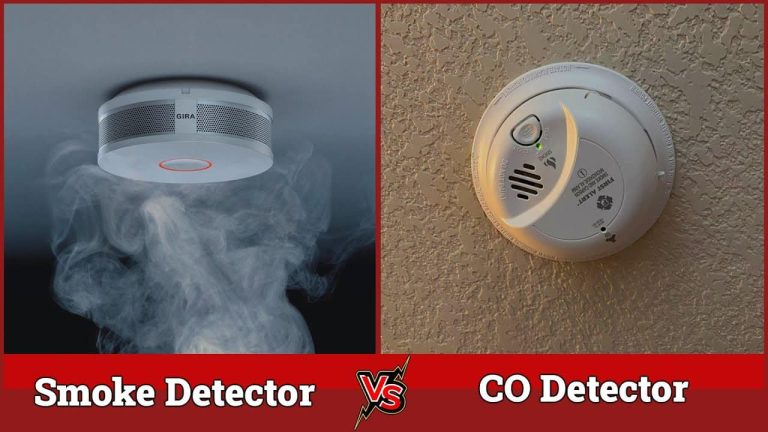
Smoke and carbon monoxide detectors are essential devices for home safety. While both protect you from potential dangers, they detect very different threats. Understanding what each detector does, how they work, and why having both is crucial can help ensure your home and family stay safe.
After 17 years of installing electrical safety systems in homes across Port Coquitlam, Coquitlam, Burnaby, and the Tri-Cities, we’ve answered this question hundreds of times. This guide gives you a clear, practical answer, including exactly where to place each detector and what BC code actually requires.
What Does a Smoke Detector Do?
A smoke detector monitors the air for combustion particles the tiny byproducts released when something burns. The moment smoke concentration reaches a threshold, it triggers an alarm, giving you time to evacuate or suppress a small fire before it spreads.
There are three sensor types in use today:
Ionization detectors use a tiny amount of radioactive material (Americium-241) to ionize air between two charged plates. Smoke disrupts this current and triggers the alarm. These respond fastest to fast-flaming fires, think kitchen grease fires or paper burning.
Photoelectric detectors use a light beam inside a sensing chamber. Smoke scatters the light onto a sensor, setting off the alarm. These are significantly better at detecting slow, smouldering fires, the kind that start inside walls, in upholstered furniture, or from overloaded wiring. In our experience, smouldering fires are the most dangerous because they produce heavy smoke long before flames appear.
Dual-sensor detectors combine both technologies. For most BC homeowners, dual-sensor is the best choice — it covers both fire scenarios without requiring two separate units per location.
From our installs: In older Burnaby and Coquitlam homes with knob-and-tube or aluminum wiring, smouldering electrical fires inside walls are a real risk. A photoelectric or dual-sensor detector is especially important in these homes.
What Does a Carbon Monoxide Detector Do?
A carbon monoxide (CO) detector does something a smoke detector physically cannot: it measures an invisible, odourless, tasteless gas that kills without warning.
Carbon monoxide is produced by incomplete combustion any time a fuel (natural gas, propane, wood, gasoline) burns without enough oxygen. Common sources in Metro Vancouver homes include:
- Gas furnaces and boilers (especially older or poorly maintained units)
- Fireplaces and wood stoves
- Gas dryers, stoves, and water heaters
- Attached garages with running vehicles
- Portable generators run indoors or too close to windows
CO detectors use electrochemical sensors a chemical reaction occurs when CO contacts the sensor, generating an electrical signal proportional to CO concentration. The alarm sounds before levels reach dangerous thresholds (typically 70 ppm sustained over a period, per CSA 6.19 standard).
Why CO is so dangerous: CO binds to hemoglobin in your blood 200 times more readily than oxygen. At moderate levels, symptoms mimic the flu headache, nausea, dizziness. Many people go to sleep and don’t wake up. Health Canada estimates CO poisoning causes over 50 preventable residential deaths in Canada each year.
Smoke Detector vs. CO Detector: Side-by-Side Comparison
| Feature | 🔴 Smoke Detector | ⚫ CO Detector |
|---|---|---|
| What it detects | Combustion particles (smoke) | Carbon monoxide gas |
| Sensor type | Ionization / Photoelectric / Dual | Electrochemical |
| Threat detected | Fire | CO poisoning |
| Visible threat? | ✅ Smoke is visible | ❌ Invisible & odourless |
| BC Code required? | ✅ Yes — s.9.10.19 | ✅ Yes — s.9.10.19.3 |
| Required locations | Each floor, outside & inside sleeping areas | Outside sleeping areas; near fuel-burning appliances |
| Interconnected? | Required in new construction | Required in new construction |
| Lifespan | 8–10 years | 5–7 years |
What Does BC Building Code Actually Require?
This is where many homeowners — and even some contractors — get it wrong.
Under the BC Building Code (Division B, Section 9.10.19), all new residential construction and substantial renovations must have:
- Smoke alarms on every storey, including basements, and in every sleeping room
- Carbon monoxide alarms outside each sleeping area and on each storey containing a fuel-burning appliance or attached garage
- Interconnected alarms — when one goes off, all go off throughout the home
- Both alarms must be hardwired with battery backup in new construction; battery-only units are acceptable for replacing existing detectors in older homes
If your home was built before 1990, it likely has neither interconnected alarms nor hardwired CO detectors. This is extremely common in Port Coquitlam, Coquitlam, and Burnaby neighbourhoods with mid-century housing stock. A licensed electrician can retrofit interconnected, hardwired units — which is the right solution, not just adding more battery units.
Where to Place Each Detector: A Room-by-Room Guide
Smoke detectors place here:
- On the ceiling or high on the wall (within 30 cm of ceiling) in every bedroom
- In the hallway outside sleeping areas
- On every storey, including unfinished basements
- On the ceiling at the top of stairwells
- Keep away from: cooking appliances (causes nuisance alarms), bathrooms (steam), and air vents
CO detectors place here:
- Outside every sleeping area (CO affects you most when you’re asleep and can’t notice symptoms)
- On every storey with a gas appliance — furnace room, kitchen, laundry room with gas dryer
- Near attached garages
- Keep away from: directly above or beside fuel-burning appliances (install at least 1.5 m away), exterior walls in cold climates (temperature affects sensor accuracy)
Combined smoke/CO detectors: Acceptable for most residential applications and often the practical choice for retrofits. Best placed outside bedroom areas where both threats apply. For furnace rooms or garages, a standalone CO detector may be better positioned where you wouldn’t normally place a smoke detector.
When to Replace Your Detectors
This is one of the most overlooked home safety issues we encounter. Most homeowners don’t know their detectors expire.
- Smoke detectors: Replace every 8–10 years from manufacture date (printed on the back)
- CO detectors: Replace every 5–7 years — electrochemical sensors degrade over time and will fail without warning
- Replace immediately if the unit chirps continuously after battery replacement, fails a test, or shows visible damage
We regularly find detectors in Tri-Cities homes that are 15–20 years old. An expired detector may look functional but provide no protection.
Do You Need a Professional Electrician to Install Detectors?
For simple battery-operated replacement units: no. Swap them yourself.
For hardwired detectors which is what BC Code requires in new builds and major renovations you need a licensed electrician. Hardwired units connect to your home’s electrical system and require proper wiring, breaker connections, and interconnection between units. Incorrect wiring can create electrical hazards or leave units that appear to function but won’t actually interconnect.
If you’re renovating, finishing a basement, adding a suite, or your home has never had hardwired interconnected alarms, contact a licensed electrician for a proper installation.
Conclusion
Smoke detectors and carbon monoxide detectors play distinct but equally crucial roles in home safety. While smoke detectors protect you from fires, CO detectors alert you to carbon monoxide buildup—an invisible but potentially deadly threat. Having both detectors in your home ensures you’re covered against these risks, keeping you and your family safe. By installing these devices and placing them strategically, you create a safer environment and enjoy peace of mind knowing you’re prepared for the unexpected.
If you’re in the Tri-City area and need professional assistance with smoke detector installation, contact IntelPower for expert service and reliable installation. Ensure your home is fully protected—call IntelPower today to schedule an installation and make your home safer.
FAQ
Can one detector replace both a smoke and CO detector?
Yes. combination smoke/CO detectors are code-compliant and widely used. They save space and reduce installation cost. However, in homes with multiple fuel-burning appliances, additional standalone CO detectors near those appliances are a good idea.
My CO detector keeps alarming but I don't feel sick. Is it a false alarm?
Don't assume it's false. Evacuate immediately and call 911 or BC Gas (FortisBC: 1-800-663-9911). CO at low levels causes mild symptoms many people dismiss as tiredness. Only return after emergency responders confirm it's safe.
How do I test my detectors?
Press and hold the test button for 3–5 seconds. The alarm should sound. Test monthly. Also vacuum the detector cover gently every 6 months — dust buildup can reduce sensor sensitivity.