If your EV charger shows a temperature warning, smells burnt, has visible scorching or melting, or repeatedly trips the breaker, stop using it. If there is no immediate danger and you can do so without approaching suspect equipment, stop the charging session through the vehicle or charger app. Do not touch or pull out a hot or damaged plug, open the charger, or repeatedly restart charging to see whether the problem returns.
If you see smoke, fire or active sparking, move away, keep others clear and call 911. Do not approach the equipment to unplug it or attempt to troubleshoot it. Stopping a session in an app does not electrically isolate the charger or make damaged equipment safe to handle.
Some warmth can occur during normal charging, but temperature alone is not enough to judge safety. The equipment model, operating conditions, warning messages and location of the heat all matter. This guide helps BC homeowners understand the next safe step; it cannot diagnose an electrical fault remotely.
Is It Normal Warmth or a Reason to Stop Charging?
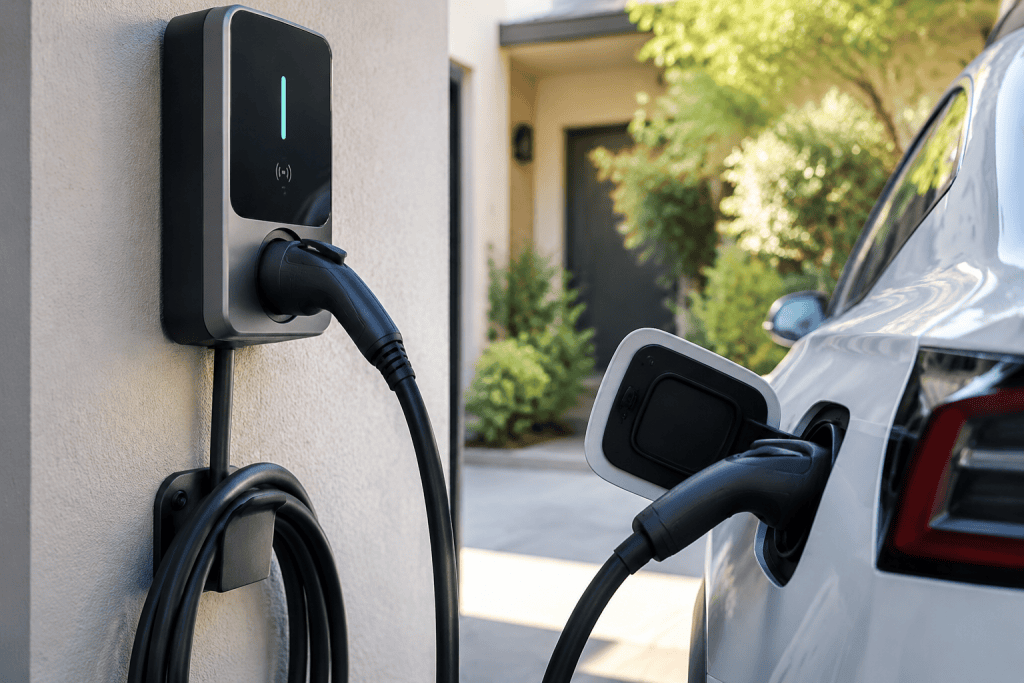
There is no universal surface-temperature threshold that makes every EV charger safe. A manufacturer’s ambient operating-temperature range is not the same as a safe temperature for every plug, connector or internal component. Do not use your hand as a temperature test or assume that equipment is safe because it has not tripped a breaker.
| What you notice | What it tells you | What to do |
|---|---|---|
| Mild warmth, with no warning, damage, unusual smell or change in behaviour | Warmth can occur in normal use, but this does not establish that every installation is safe. | Consult the model-specific manual. If the warmth is new, increasing or concerning, stop charging and seek advice rather than testing by touch. |
| A temperature alert or heat-related reduction in charging power | A protective response may be active; the cause is not established by the alert alone. | Stop the session safely, record the exact message and consult the relevant manual or support team before resuming. |
| Burning smell, discoloration, melting or apparent overheating at a connection | An electrical fault or heat damage may be present. | Stop use, keep clear of suspect equipment and arrange urgent professional assessment. Do not handle the plug or connector. |
| Repeated breaker trips | A circuit or equipment condition needs investigation; it is not necessarily a temperature fault. | Leave the charger out of use and contact a qualified electrical contractor. Do not keep resetting the breaker. |
| Smoke, fire or active sparking | There may be an immediate fire or electrical danger. | Move away, keep others clear and call 911. Do not attempt disconnection or investigation. |
The Electrical Safety Foundation’s EV charging guidance advises following manufacturer instructions, checking charging cables before use and never using damaged charging equipment. A cable or connector that has cooled down is not necessarily safe to use again.
Why Can an EV Charger Overheat?
What people call a home “charger” includes several parts: the wall unit or portable EV supply equipment, its supply connection, the charging cable and connector, and the vehicle inlet. The fault may be in one of these parts rather than in the wall unit itself. Identifying where a warning originates helps direct the assessment, but homeowners should not open equipment or inspect energized connections.
A Poor or Deteriorated Electrical Connection
A loose, worn or damaged connection can create resistance and localized heating as current flows. In a plug-in arrangement, a receptacle or plug can be involved; hardwired equipment also has electrical connections that require correct installation and assessment.
A breaker that has not tripped does not rule out localized connection heating. Do not try tightening terminals or replacing a receptacle as a trial repair. An electrical professional needs to assess the condition of the affected components and the installation.
Installation or Configuration That Does Not Suit the Circuit
The equipment, conductors, protective devices and installed charging configuration need to work together. A setting available in an app is not proof that the installation supports it. Do not increase charging output, alter installer settings or fit a larger breaker to solve interruptions.
As a manufacturer-specific example, Tesla’s North American Gen 3 Wall Connector fault-code guidance identifies a high-temperature fault and includes electrician checks of conductor sizing and terminal connections. Those diagnostic checks belong to an appropriately qualified professional, not the homeowner.
High Ambient Temperature or an Unsuitable Location
Hot surroundings or direct sunlight can affect equipment temperature. Mounting conditions, required clearances and environmental limits vary by product, so use the instructions for the exact model rather than a generic rule.
Do not assume outdoor heat is the cause just because the problem happens on a sunny day. An installation or equipment fault may still be present. Avoid enclosing the charger in a homemade cover or box that could conflict with its installation requirements.
Damaged Cables, Connectors or Unapproved Accessories
A cable that has been pinched, driven over or otherwise damaged needs attention. The same applies to visibly damaged connectors or supply plugs. Do not tape over damage and continue using the equipment.
Extension cords, multiplug adapters and improvised connections are not a solution to poor cable reach. ESFI specifically advises against extension cords and multiplug adapters for EV charging. If an adapter is part of your charging setup, confirm its approval and suitability with the vehicle and equipment manufacturers rather than relying on a seller’s compatibility claim.
An Equipment or Vehicle-Side Fault
A charger can also have an internal component or sensor problem. A warning shown by the vehicle may concern the inlet, onboard charging system or another vehicle condition. A temperature-related message does not, by itself, identify which component needs replacement.
Record whether the message appears in the vehicle, the charger app or the charger’s status lights. Give that information to the relevant support team. Do not intentionally reproduce a suspected overheating event or try another charger when a damaged vehicle inlet or vehicle-side fault is suspected.
What Information Can You Collect Safely?
Once you are away from any immediate hazard, record the exact error text, time of the event and whether charging slowed down or stopped. Note the charger model from existing paperwork or the app, the vehicle model and any recent changes to the installation or settings.
Mention whether the problem occurred during hot weather, whether it has happened before and whether you noticed damage or odour before stopping use. Photos can help only if they can be taken from a safe position without handling the equipment or moving closer to a hazard. Do not resume charging to capture a warning or remove covers to obtain a model number.
Use the Manual for the Exact Model
Status lights and error codes differ between brands and generations. For example, Tesla’s cited Gen 3 North American guide identifies three red blinks as a high-temperature condition with charging limited or disabled. That meaning must not be applied to another model.
If the manual provides a user-level response to a temperature alert, follow it only when there are no signs of damage or immediate danger. Recurring warnings, burning odours, melting or breaker trips warrant assessment rather than repeated resets. Manufacturer support can explain the code; an electrician can assess the supply installation.
Who Should Inspect the Problem?
| Concern | Appropriate contact | What they can assess |
|---|---|---|
| Supply outlet, fixed wiring, breaker or installation configuration | A qualified electrical contractor | The circuit and installation, connection condition, equipment suitability and any necessary repair scope. |
| A charger-specific warning or suspected internal fault | The charger manufacturer or authorized service provider, with electrician involvement where needed | Model-specific diagnostics, support records, service options and warranty requirements. |
| Vehicle inlet damage or a vehicle-side warning | The vehicle manufacturer or an authorized service centre | The vehicle inlet and charging system, including whether the vehicle can be charged or moved safely. |
| Shared or strata charging equipment | The property manager or charging operator | Taking the affected equipment out of service and coordinating authorized assessment. |
| Smoke, fire or an immediate danger | Emergency services: 911 | The immediate emergency. Do not wait for an installer appointment. |
These responsibilities can overlap. Replacing a wall unit will not solve a damaged supply connection, and replacing an outlet will not necessarily resolve a vehicle fault. Diagnosis should identify the cause and any affected components before deciding on a repair.
Can You Restart Charging After It Cools Down?
Cooling alone is not evidence that the cause has been resolved. Some equipment reduces charging power or stops as a protective response, but a protective shutdown is not a repair and does not confirm that every part of the installation is undamaged.
Where there has been burning odour, scorching, melting, repeated breaker trips or physical damage, keep the equipment out of use until it has been assessed and the appropriate professional has confirmed the next steps. Do not lower the current simply to keep using a suspect connection.
For an isolated temperature alert without damage or other warning signs, use the exact manufacturer’s instructions and support advice to determine whether and when resuming is appropriate. If the alert returns or its cause remains unclear, stop and seek assessment.
How to Reduce the Risk of Future Overheating
Have the Installation and Equipment Properly Matched
Use equipment approved for its intended application and have the electrical capacity and proposed configuration assessed. In British Columbia, Technical Safety BC’s EV charger installation guidance addresses permits, contractors and load calculations. The applicable permitting authority depends on the property’s location.
Ask your installer to explain the agreed charging configuration and any energy management behaviour. If you later change the charger or want higher output, check compatibility before changing settings. For planning considerations, see our guide to EV charger installation mistakes to avoid.
Protect the Cable and Follow Product-Specific Care Instructions
Store the cable and connector as the manufacturer directs, away from vehicle wheels and places where they can be trapped or strained. Follow the specified mounting and clearance requirements. Check for visible damage before use without opening equipment or touching anything suspected of overheating.
Do not spray water on charging equipment to cool it, apply cleaning chemicals to electrical contacts or modify the enclosure. Product care, weather exposure and permitted cleaning methods are model-specific.
Keep Installation and Support Records
Retain the installation invoice, relevant permit records, equipment details and written warranty terms. Keep a record of recurring warnings even when charging later appears normal. Warranty coverage depends on the actual product and workmanship terms; professional installation does not guarantee that every future repair is covered.
Arrange an Assessment, Not a Guess at a Replacement
If you have stopped charging because of a suspected installation fault in the Tri-Cities or Greater Vancouver, check Intel Power Electric’s service area and contact the team to discuss an electrical assessment. Describe the warning and whether there is visible damage; do not restart the charger to demonstrate the problem.
A useful assessment should explain what was found, which components are affected, what work is needed and what must happen before charging resumes. For smoke, fire or immediate danger, contact emergency services instead of waiting for an appointment.
If the Assessment Leads to a New or Replacement Installation
Do not assume replacing the charger will fix a supply or vehicle fault. Once the cause has been established, our EV charger installation services can be a starting point for discussing a new installation or replacement scope.
For local installation information, see EV charger installation in Burnaby, our Langley EV charger installation guide, or installation services in Coquitlam. These are installation resources, not emergency response pages or confirmation of manufacturer-authorized repair coverage. Confirm whether the team can assess your particular equipment and what support must come from its manufacturer.
Frequently Asked Questions
Is it normal for an EV charging cable to feel warm?
Some warmth can occur during charging, but touch is not a reliable safety test. New or increasing heat, a temperature alert, burning odour, discoloration or visible damage needs attention. Use the model’s instructions and stop charging if you suspect overheating.
Should I unplug an overheating EV charger immediately?
Do not touch or pull out a hot or damaged plug or connector. If there is no immediate danger, stop the session remotely if possible without approaching suspect equipment. Keep clear and arrange assessment. Smoke, fire or active sparking calls for moving away and calling 911, not attempting disconnection.
Why does charging slow down when the charger gets hot?
Some models reduce charging power in response to temperature. Other conditions can also slow charging, so check the exact warning rather than assuming heat is responsible. A heat-related reduction may be protective, but repeated events need investigation.
Can I use a fan or reduce the charging current to fix overheating?
Neither establishes that the equipment is safe. Cooling the outside or reducing demand can mask a connection or component problem. Follow the manufacturer for an environmental temperature alert, and have suspected damage or recurring overheating assessed before further use.
Why is my EV charger overheating if the breaker never trips?
Localized heating can occur at a poor connection without a breaker trip. The absence of a trip is not proof of safety. Stop using equipment with warning signs and have the cause assessed.
Does a hot charger mean my EV battery is overheating?
Not necessarily. Supply equipment, connectors and the vehicle battery are different parts of the charging system. A charger warning alone does not diagnose the battery. A vehicle temperature warning or suspected vehicle damage needs manufacturer guidance; smoke or fire is an emergency.
Is a hardwired charger immune to overheating?
No. Hardwiring removes a supply plug-and-receptacle connection, but terminals, cables and other components can still develop problems. Both hardwired and plug-in arrangements need suitable equipment, proper installation and attention to warning signs.
Can I charge somewhere else while the home charger is inspected?
That depends on where the fault is. Do not test another charger if the vehicle inlet, connector interface or vehicle itself may be affected. Ask the relevant professional or vehicle manufacturer whether alternative charging is appropriate after the problem has been assessed.