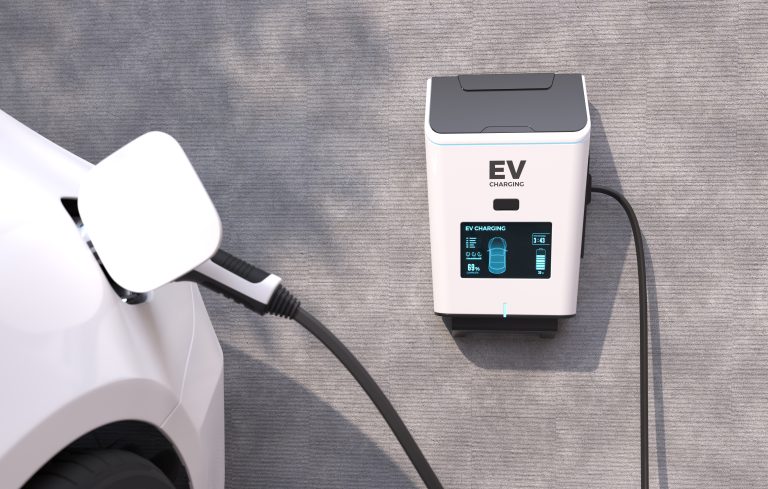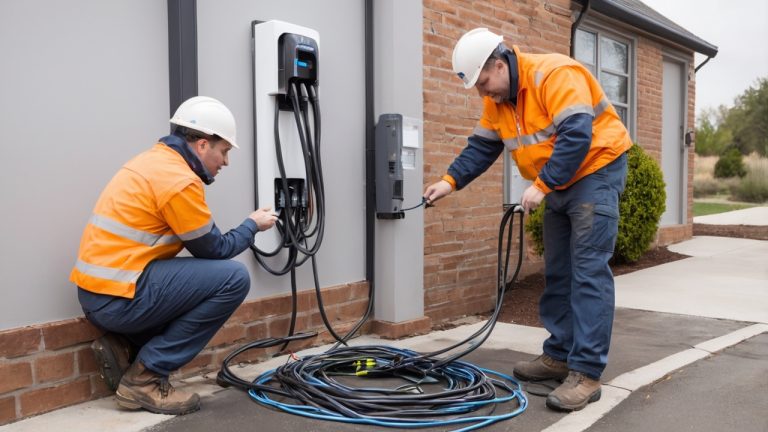

Charging at home should be simpler than planning your week around public stations. Intel Power installs EV charging equipment for homes, strata properties, workplaces, retail sites and fleets in Langley, with the electrical assessment and permit process built into the job.
The right installation is not simply the fastest charger your vehicle can accept. It is a charging setup that fits your daily driving, electrical service, parking location and budget—without creating an unsafe load or paying for capacity you will not use.
Request an EV charger installation quote or call (604) 618-0977 to discuss your vehicle, property and preferred charger location.
What Should an EV Charger Installation Include?
A safe, useful quote starts with the whole electrical system, not just the charger. For a typical Langley home or business, the assessment should cover:
- Your vehicle’s connector and maximum AC charging rate
- The charger’s voltage, amperage and manufacturer requirements
- Available capacity in the electrical panel
- The distance and route from the panel to the parking space
- Indoor or outdoor mounting and weather exposure
- Hardwired installation versus a dedicated receptacle
- Electrical permit and inspection requirements
- Load management options if the panel has limited capacity
- Plans for a second EV, a suite, a heat pump or other future electrical loads
After the assessment, you should know what will be installed, whether a panel or service upgrade is actually needed, which costs are included and what documentation you will receive.
Which EV Charger Level Is Right for You in Langley?

Level 1 Charging
Level 1 charging uses a standard 120-volt connection. It can work for plug-in hybrids, short daily trips or drivers whose vehicle remains parked for long periods. It is the slowest option and may not restore enough range overnight for a driver with a larger battery or a long commute.
Level 2 Charging
Level 2 is the usual choice for residential EV charger installation in Langley. It uses a 208- or 240-volt supply and can provide practical overnight charging. The actual speed depends on the charger, circuit, vehicle and temperature—not simply the number printed on the charger box.
A lower-amperage Level 2 installation may be all a household needs and can sometimes avoid unnecessary electrical upgrades. If capacity is tight, an EV energy management system may allow charging to reduce or pause when other major loads are operating.
DC Fast Charging
DC fast charging is mainly used for public charging, commercial fleets and high-turnover locations. It requires substantially more electrical capacity, planning and investment than a home Level 2 charger. A commercial feasibility review should consider utility capacity, demand, usage patterns, networking, payment systems and expansion plans before equipment is selected.
Do You Need an Electrical Panel Upgrade?
Not automatically. Charger marketing often focuses on maximum speed, but your home’s available electrical capacity is the deciding factor.
A licensed electrician should complete a load assessment before adding the circuit. If the existing service cannot support the proposed charger at full output, the practical options may include:
- Selecting a lower charging amperage that still replaces your daily driving range overnight.
- Installing an approved EV power management device that controls charging in response to other household loads.
- Upgrading the panel or electrical service when the existing equipment, condition or long-term load plan justifies it.
The best choice depends on measured or calculated demand, future electrification plans and total project cost. A panel upgrade should be a reasoned recommendation, not an automatic add-on.
Hardwired Charger or 240-Volt Receptacle?
Both arrangements can be appropriate when the equipment and circuit are correctly designed, but they are not interchangeable in every situation.
A hardwired charger reduces plug-and-receptacle connection points and is often preferred for outdoor or higher-current installations. A plug-in unit can be easier to replace or take with you, but it requires a compatible, properly rated receptacle and installation. Portable equipment and outlet-only work may not qualify for the same rebate treatment as an eligible, permanently mounted charger.
Before choosing, confirm the charger model, installation instructions, cable reach, outdoor rating, rebate eligibility and your plans for the property.
Tesla and Other EV Charger Compatibility
Intel Power can assess charging options for Tesla and other electric vehicles using NACS/J3400 or J1772 connections. The vehicle’s inlet, any adapter requirements and its onboard AC charging limit should be confirmed before purchasing equipment.
If a rebate matters to your decision, check the current eligible-equipment list before buying. BC Hydro’s current home-charger program states that Tesla charging stations are not eligible, even though a Tesla vehicle can use other compatible charging equipment. Eligibility rules can change, so verify the exact model and current program terms before purchase.
EV Charger Permits in Langley
EV charging equipment is a significant continuous electrical load. Technical Safety BC states that EV charger installations generally require an electrical installation permit and warns that unpermitted work can create safety, compliance and insurance problems.
For work completed by a licensed electrical contractor, the contractor normally obtains the applicable electrical permit. The authority with jurisdiction can vary by property location, so the permit issuer should be confirmed for the specific address rather than assumed from the word “Langley.”
Permit-backed work also matters for many rebate applications. Keep the permit number, charger invoice, itemized installation invoice and a clear photo of the completed installation.
EV Charger Rebates Available in British Columbia
As of September 2026, BC Hydro’s single-family home program may cover 50% of eligible charger purchase and installation costs, up to $350, for qualifying new, permanently installed Level 2 equipment. An additional rebate of up to $200 may be available for an eligible EV power management device. Eligible BC Hydro customers may also qualify for a Peak Saver enrollment bonus for a compatible smart charger.
Important details include:
- The charger must appear on the current eligible-model list and meet the program’s certification and connector requirements.
- A permit is required for eligible new electrical work.
- Installing only a 240-volt outlet is not eligible under the home-charger offer.
- The program has application deadlines and documentation requirements.
- Apartment, condo, townhouse-complex and workplace programs have different limits and may require pre-approval before work or purchases begin.
- Funding and eligibility can change. Verify the current rules before purchasing equipment.
What Affects EV Charger Installation Cost in Langley?
There is no useful one-price-fits-all figure. Two installations using the same charger can have very different costs because the electrical and physical conditions differ.
The main price drivers are:
- Distance from the panel to the parking location
- Finished walls, crawl spaces, trenching or concrete work along the cable route
- Circuit amperage and conductor requirements
- Available panel spaces and electrical service capacity
- Need for load management, a subpanel or a service upgrade
- Indoor versus outdoor equipment and mounting protection
- Permit and inspection costs
- Charger supply, networking and commissioning requirements
- Multiple ports, billing controls or future expansion for commercial projects
For an accurate comparison, request an itemized quote that identifies the charger or circuit rating, cable route, permit, restoration work, commissioning and exclusions. A low headline price is not comparable if essential work is left outside the scope.
Residential EV Charger Installation in Langley
For a single-family home, the goal is usually reliable overnight charging without overbuilding the system. Before the visit, note your vehicle model, approximate daily distance, panel location and preferred parking spot. Photos of the panel label, main breaker, surrounding area and proposed charger wall can help with an initial review.
Townhouses and strata properties can require additional approval, parking-access planning or shared electrical infrastructure. Obtain written permission where required and confirm whether the project falls under a multi-unit rebate stream before work begins.
Commercial, Workplace and Fleet EV Charging
Commercial EV charging needs a usage plan before it needs hardware. A retail site may prioritize dwell time and customer access; a workplace may need fair sharing among employees; a fleet may need every vehicle ready by a fixed departure time.
A commercial Level 2 charger installation in Langley may include:
- Site and electrical capacity assessment
- Charger quantity, placement and accessibility planning
- Load sharing or scheduled charging
- Network, access control and payment requirements
- Civil work, bollards, signage and cable protection
- Utility coordination and future expansion capacity
- Permit, commissioning and staff handover
Workplace and multi-unit rebate programs may require pre-approval, so funding should be checked before equipment is ordered or construction starts.
Our EV Charger Installation Process
- Initial consultation: We confirm the vehicle, property type, charging goals and preferred location.
- Electrical assessment: We review the panel, service capacity, circuit route and site conditions.
- Clear options and quote: You receive a recommended charging configuration and scope, including any load-management or upgrade options.
- Permit and scheduling: The required electrical permit is arranged and the work is scheduled.
- Installation: The circuit and charging equipment are installed according to applicable requirements and manufacturer instructions.
- Testing and handover: We test operation, explain basic charger settings and provide the project documentation.
Questions to Ask Before Hiring an EV Charger Installer
- Are you a licensed electrical contractor in British Columbia?
- Will you obtain the electrical permit and provide the permit number?
- Does the quote include a load assessment?
- Is the proposed charger or receptacle suitable for continuous EV charging?
- Is the equipment approved for use in Canada and eligible for any rebate I plan to claim?
- Are trenching, drywall repair, network setup or service-upgrade costs included?
- What workmanship warranty and post-installation support are provided?
Clear answers protect your budget and make it easier to compare proposals on the same scope.
Frequently Asked Questions About EV Charger Installation in Langley
How long does a home EV charger installation take?
Straightforward installations may be completed in a single visit after assessment and permitting. A long cable route, trenching, panel work, utility coordination or strata approval can extend the project. The schedule should be confirmed after the site conditions are known.
Can I install the most powerful charger available?
Only if the charger, vehicle and electrical system support it. Higher amperage does not help when the vehicle accepts a lower AC rate, and it may add unnecessary electrical cost. The objective is enough charging for your real driving needs.
Can an EV energy management system avoid a panel upgrade?
In some homes, yes. An approved EVEMS can control charger load when other major electrical loads are operating. Suitability must be determined through an electrical assessment.
Is a permit required for an EV charger in Langley?
Most installations require an electrical installation permit. The correct authority depends on the property’s jurisdiction and project type. A licensed contractor should confirm and arrange the applicable permit.
Are Tesla chargers eligible for the BC Hydro home rebate?
BC Hydro’s current eligibility page says Tesla charging stations are not eligible. Tesla owners may still be able to use another eligible charger, depending on vehicle and connector compatibility. Always check the exact model against the current list before purchase.
Do I need to buy the charger before requesting a quote?
No. It is often better to confirm electrical capacity, mounting conditions, connector compatibility and rebate eligibility first. That reduces the risk of buying equipment that is oversized, incompatible or ineligible.
Get an EV Charger Installation Quote in Langley
Tell us what you drive, where you park and what you want charging to accomplish. Intel Power can review the electrical conditions and recommend a practical installation for your home or business.