Quick answer: A straightforward Level 2 EV charger installation commonly costs about $1,200 to $3,500 CAD in Metro Vancouver when the charger, electrical work, materials, permit and inspection are included. A simple installation may fall near the lower end. A long run, detached garage, outdoor installation or electrical upgrade can move the total to $4,500 or more.
These are planning ranges, not a substitute for an electrical assessment. Two homes with the same vehicle and charger can receive very different quotes because their panels, wiring routes and parking locations are different.
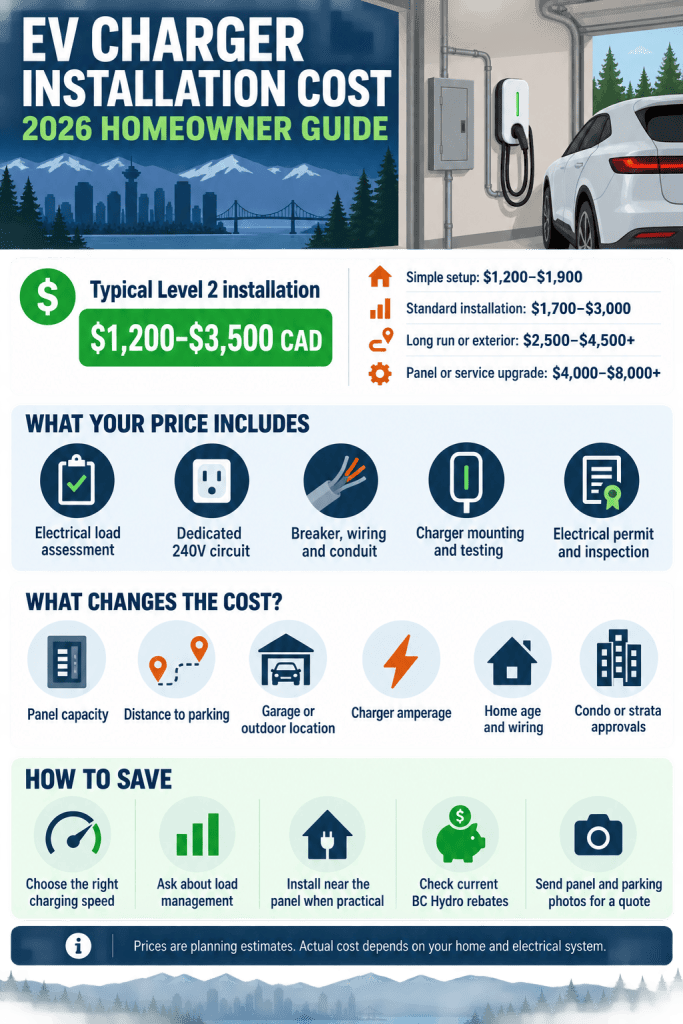
Average EV Charger Installation Cost Breakdown
The following ranges can help you create a realistic budget before requesting a quote. They are based on common residential Level 2 installation scenarios in the Lower Mainland and should be treated as estimates rather than fixed prices.
| Installation scenario | Typical planning range | What usually affects the price |
|---|---|---|
| Simple Level 2 installation | $1,200–$1,900 | Panel has capacity, charger is close to the panel and the cable route is accessible |
| Standard installed Level 2 charger | $1,700–$3,000 | Normal cable run, quality charger, dedicated circuit, permit and inspection |
| Long run or exterior installation | $2,500–$4,500+ | More wire, conduit, weatherproofing, difficult access or detached garage |
| Panel or service upgrade project | $4,000–$8,000+ | Panel replacement, service changes, utility coordination or several electrical upgrades |
A Level 1 charger may cost little or nothing to install if you already have a suitable 120-volt receptacle. It is slower, however, and may not replace enough range during an overnight period for drivers with long daily commutes. Level 2 chargers use a dedicated 208- or 240-volt circuit and are the usual choice for homeowners who want convenient overnight charging.
Do not compare a low advertised price with a complete installation price until you confirm what is included. Some starting prices cover only labour for a short circuit run. Others may exclude the charger, permit, inspection, breaker, conduit or wall repair.
What’s Included in the Installation Price
A professional EV charger installation is more than attaching a box to the garage wall. The electrician should first understand how the charger will interact with the rest of the home’s electrical system.
Electrical assessment and load review
The electrician reviews the main panel, service rating, available breaker spaces, existing loads and the charger’s required amperage. A 100-amp panel is not automatically unsuitable, and a 200-amp panel is not automatically sufficient. The actual household load matters, especially when the home also has an electric range, dryer, hot tub, heat pump, electric water heater or secondary suite.
Dedicated circuit and protection
Most Level 2 chargers require a dedicated circuit with the correctly sized breaker, conductors and protection. The circuit must be designed for the charger’s continuous load and installed according to applicable Canadian electrical requirements.
Wiring, conduit and mounting
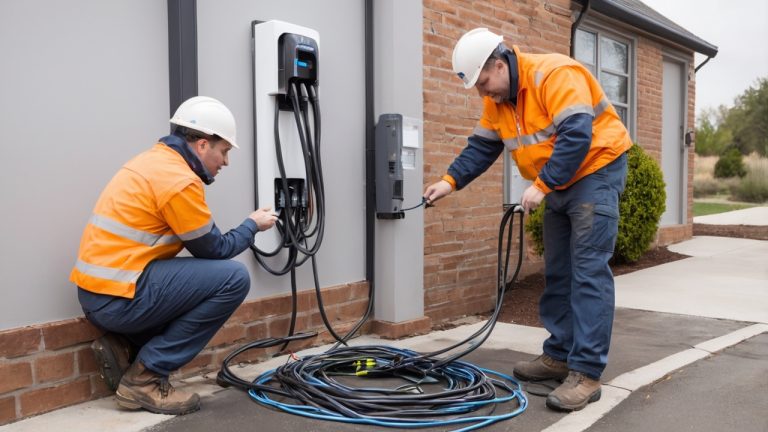
The scope may include cable from the panel to the charging location, conduit, junction boxes, weatherproof fittings, a disconnect where required, and secure mounting. Outdoor installations need equipment and connections suitable for the location. A detached garage may require trenching or another protected route between structures.
Hardwired or plug-in connection
A plug-in installation uses a suitable receptacle, such as a NEMA 14-50 configuration, while a hardwired installation connects the EVSE directly to the circuit. Plug-in equipment can offer flexibility if you plan to change the charger later. Hardwiring is often preferred for outdoor installations or higher-output equipment, depending on the manufacturer’s instructions and the site conditions.
Permit, inspection and testing
In British Columbia, an electrical permit must be in place before applicable installation work begins. The responsible electrician should explain who is applying for the permit, whether the fee is included, and how the inspection process will be completed. The charger should be tested before the job is closed so you know it is operating correctly.
Ask for these items to be listed separately in the written quote. Clear scope makes it easier to compare contractors and reduces the risk of unexpected additions.
Factors That Raise or Lower Your Cost
Distance between the panel and parking space
The shortest practical route is usually the least expensive. A charger installed on the other side of the garage may need only a modest amount of cable. A charger on an exterior wall, driveway post or detached garage can require substantially more wire, conduit, weatherproofing and labour.
Panel capacity and available space
The panel’s main rating is only the starting point. The electrician must consider what the home is already using and what it may use in the future. If the panel cannot safely support the new EV load, possible solutions may include reducing the charger amperage, installing a load management system, adding a subpanel or upgrading the electrical service.
Charger output and vehicle compatibility
A higher-amperage charger is not automatically faster for every EV. The vehicle’s onboard charging system limits how much power it can accept. Choosing a charger that matches the vehicle and your daily driving needs can prevent you from paying for capacity you will not use.
Home age and wiring condition
Older homes may have limited panel capacity, outdated wiring, crowded panels or difficult wall access. If the installation exposes another electrical safety issue, correcting it may be necessary before the charger can be connected.
Attached garage, detached garage or outdoor parking
An attached garage close to the panel is often the simplest scenario. A detached garage or outdoor parking location may require trenching, underground conduit, a post mount, weatherproof equipment or additional protection from vehicle impact.
Single-family home, condo or strata property
Condo and strata installations often involve additional approvals, parking-stall rules, metering decisions, load-management requirements and coordination with the property manager or strata council. The electrical work may also involve common property. These projects should be assessed before you purchase a charger.
Labour vs Equipment vs Permit Costs
Understanding the parts of the quote helps you see why two contractors may give different totals.
| Cost component | What it may include | Why it varies |
|---|---|---|
| Charger or EVSE | Wall-mounted unit, cable, software features and manufacturer warranty | Brand, amperage, smart features, indoor or outdoor rating and warranty support |
| Electrical labour | Assessment, circuit installation, mounting, connections and testing | Access, cable distance, installation complexity and time on site |
| Materials | Breaker, wire, conduit, boxes, fittings, disconnects and mounting hardware | Charger amperage, cable length, route and indoor or outdoor conditions |
| Permit and inspection | Electrical permit application, documentation and inspection coordination | Authority having jurisdiction and project scope |
| Electrical upgrade | Load management, subpanel, panel replacement or service upgrade | Existing capacity, future loads and utility or site requirements |
Some homeowners purchase the charger themselves. That can work, but confirm that the model is approved for use in Canada, compatible with your vehicle and suitable for the planned connection. When the electrician supplies the unit, it may be easier to coordinate compatibility, warranty support and installation timing.
How to Get an Accurate Installation Quote
The most reliable quote comes from information about your actual home, not just the vehicle model. Before contacting an electrician, prepare:
- The make and model of your EV, and whether you already own a charger.
- A clear photo of the electrical panel, including the main breaker rating and available spaces.
- A photo of the garage, driveway or parking stall where the charger will be installed.
- An approximate measurement or description of the route between the panel and charger.
- Whether the charger will be indoors, outdoors, in an attached garage or in a detached garage.
- Large existing or planned electrical loads, such as a heat pump, hot tub, suite or electric range.
- Whether you may add a second EV in the future.
- For a condo or strata, the available parking, approval and metering information.
Ask every contractor to answer the same questions:
- Is the charger included in the quoted price?
- Is the dedicated circuit, breaker, wiring and conduit included?
- Who obtains the electrical permit and coordinates inspection?
- Does the price include wall mounting, weatherproofing and testing?
- Will a load calculation be completed before the installation?
- What could cause the price to change?
- Is the quote based on a site visit, photos or assumptions?
Intel Power Electric provides EV charger installation assessments for homeowners and properties across Coquitlam, Port Coquitlam, Port Moody, Burnaby and nearby Metro Vancouver communities. A site-specific review is the best way to determine whether your project needs a standard circuit, load management or a larger electrical upgrade.
Ways to Reduce Your Installation Cost
Choose the right charging speed
Do not automatically select the highest-amperage charger. If your vehicle cannot use the additional output, a smaller unit may meet your needs with less demanding wiring and protection requirements.
Install near the electrical panel when practical
Choosing a parking location close to the panel can reduce wire, conduit and labour costs. This is not a reason to place the charger where it creates a trip hazard or is exposed to vehicle impact, but it is worth considering during planning.
Ask about load management
If the panel is close to its practical limit, a load management solution may cost less than a full panel upgrade. It can regulate EV charging when other major loads are operating. Whether it is appropriate depends on the equipment, the home’s electrical design and local requirements.
Coordinate related electrical work
If you already plan a panel upgrade, garage renovation, heat-pump installation or other electrical project, discussing the work together may reduce duplicated labour and planning.
Check current rebates before purchasing equipment
BC Hydro currently states that eligible single-family homes, row homes and duplexes may receive 50% of the cost to buy and install an eligible Level 2 charger, up to $350. Eligible smart chargers may also qualify for Peak Saver credits. Programs and eligibility can change, so review the current requirements on the BC Hydro home EV charger page before starting the project.
A rebate should be treated as a possible reduction in your final cost, not as a reason to skip permitting or choose equipment that does not suit your electrical system.
Frequently Asked Questions About EV Charger Installation Cost
How much does it cost to install a Level 2 EV charger in BC?
In Metro Vancouver, a typical installed Level 2 charger commonly costs about $1,200 to $3,500 CAD when the charger, dedicated circuit, labour, materials, permit and inspection are included. Long cable runs, detached garages, outdoor routing and electrical upgrades can increase the total.
Do I need a panel upgrade for an EV charger?
Not always. The answer depends on your panel capacity, existing household load, charger amperage and future electrical plans. A load calculation may show that your existing panel is suitable, that the charger should be set to a lower output, or that load management or a panel upgrade is needed.
Can I install an EV charger on a 100-amp panel?
Sometimes. A 100-amp panel is not an automatic no, but it needs a proper electrical assessment. The electrician must consider the range, dryer, hot tub, heat pump, water heater and other equipment already connected to the service.
Can I use my existing dryer outlet for EV charging?
Do not assume that a dryer outlet is suitable. The outlet, wiring, breaker, connection type and circuit load must be assessed by a qualified electrician. EV charging can draw a steady load for many hours, which is different from typical intermittent appliance use.
Is hardwired or plug-in EV charging better?
Both can be appropriate. A plug-in setup may offer flexibility, while hardwiring can provide a stable connection and is often preferred for outdoor installations or higher-output equipment. The charger manufacturer’s instructions and the installation location should guide the decision.
Do I need an electrical permit in British Columbia?
BC Hydro states that an electrical permit must be in place before applicable home charger installation work begins. Your electrician should confirm the correct permit process for your location and explain whether the permit and inspection are included in the quote.
How long does home EV charger installation take?
A straightforward garage installation may be completed in one visit after the project is approved and the required materials are available. Complex work involving permits, trenching, utility coordination, a detached garage or a panel upgrade can take longer.
Is it cheaper to buy the EV charger myself?
It can be, but the lowest equipment price does not always produce the lowest project cost. Before buying, confirm Canadian approval, charger compatibility, amperage, connection type, warranty terms and whether the electrician will install customer-supplied equipment.
Can I install an EV charger myself?
Electrical work involving a new circuit, hardwiring or panel changes should be handled according to British Columbia’s permit and safety requirements. Hiring a qualified electrician helps ensure the circuit is correctly designed, permitted, inspected and tested.
What information should I send for an EV charger quote?
Send photos of the electrical panel and parking location, the approximate distance between them, your EV model, the charger model if already selected, and details about major electrical loads. This information helps the electrician identify the likely installation path before an on-site assessment.
Get a Clear EV Charger Installation Quote
The best quote is not necessarily the lowest number. It is the quote that explains the charger output, circuit design, cable route, permit and inspection process, included materials, exclusions and any possible panel-capacity issue. That clarity helps you avoid surprises and gives you confidence that the installation is designed for your home.
If you are planning a home EV charger installation in Coquitlam, Port Coquitlam, Port Moody, Burnaby or another Metro Vancouver community, contact Intel Power Electric for a site-specific assessment. Call (604) 618-0977 or email info@intelpower.ca.
Pricing note: The ranges in this article are general 2026 planning estimates in Canadian dollars. Actual pricing depends on the property, electrical system, equipment, access, permit requirements and installation scope. Rebate availability and eligibility may change. Confirm current program details with the applicable utility or government provider.