
What a Proper EV Charger Installation Includes
A charger is only as safe as the circuit behind it. A Level 2 unit can draw 32 to 48 amps for several hours every night, so the wire, breaker and connections work close to their rating for long stretches. That is very different from a kettle or a hair dryer that runs for a few minutes. Here is what a complete installation from our team covers:
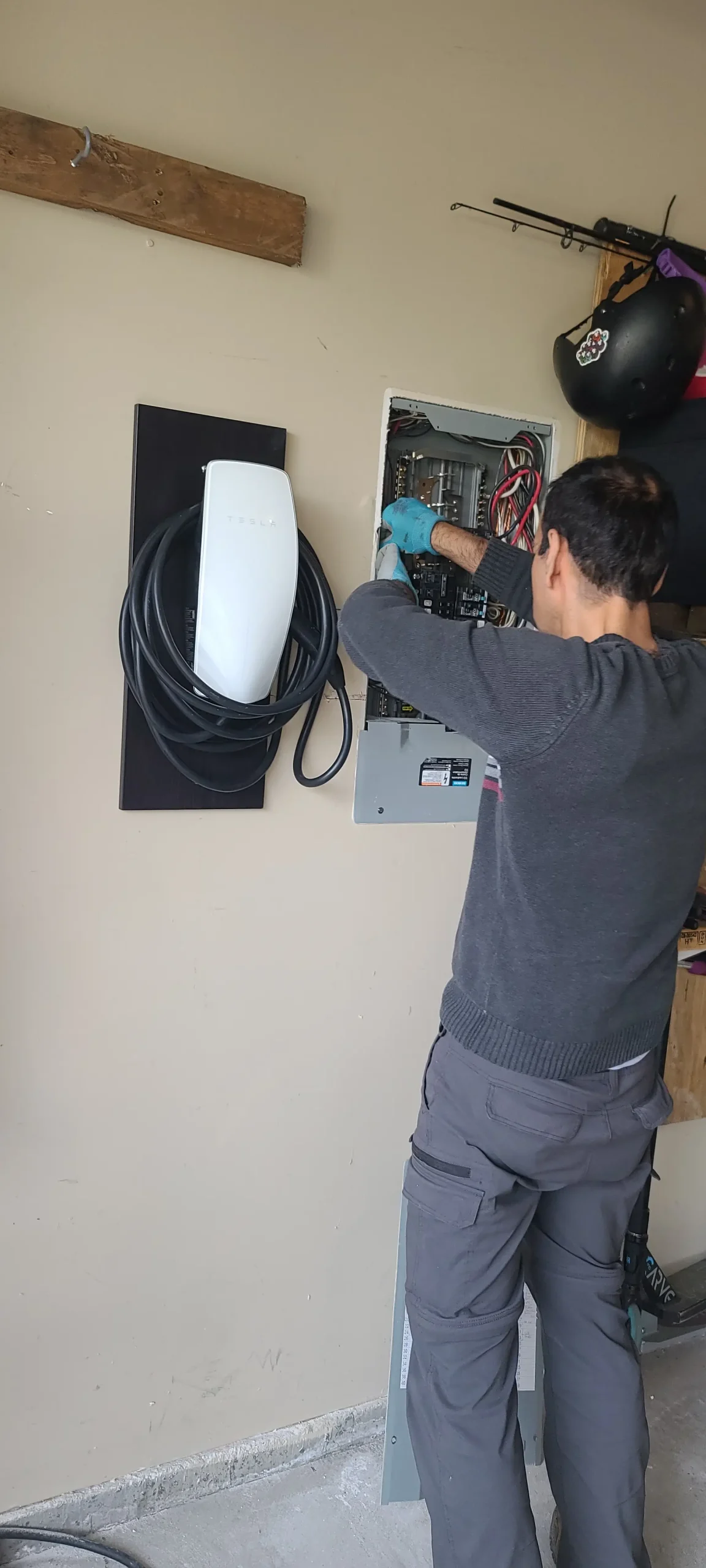
- Load calculation. We add up the major loads in your home, such as electric heat, range, dryer, hot water tank, heat pump and hot tub, and confirm how much capacity is left for EV charging before you buy anything.
- Charger and location planning. We match the charger output to your vehicle’s onboard charger and to the spare capacity, then choose a mounting spot that suits how you park and how far the cable has to reach.
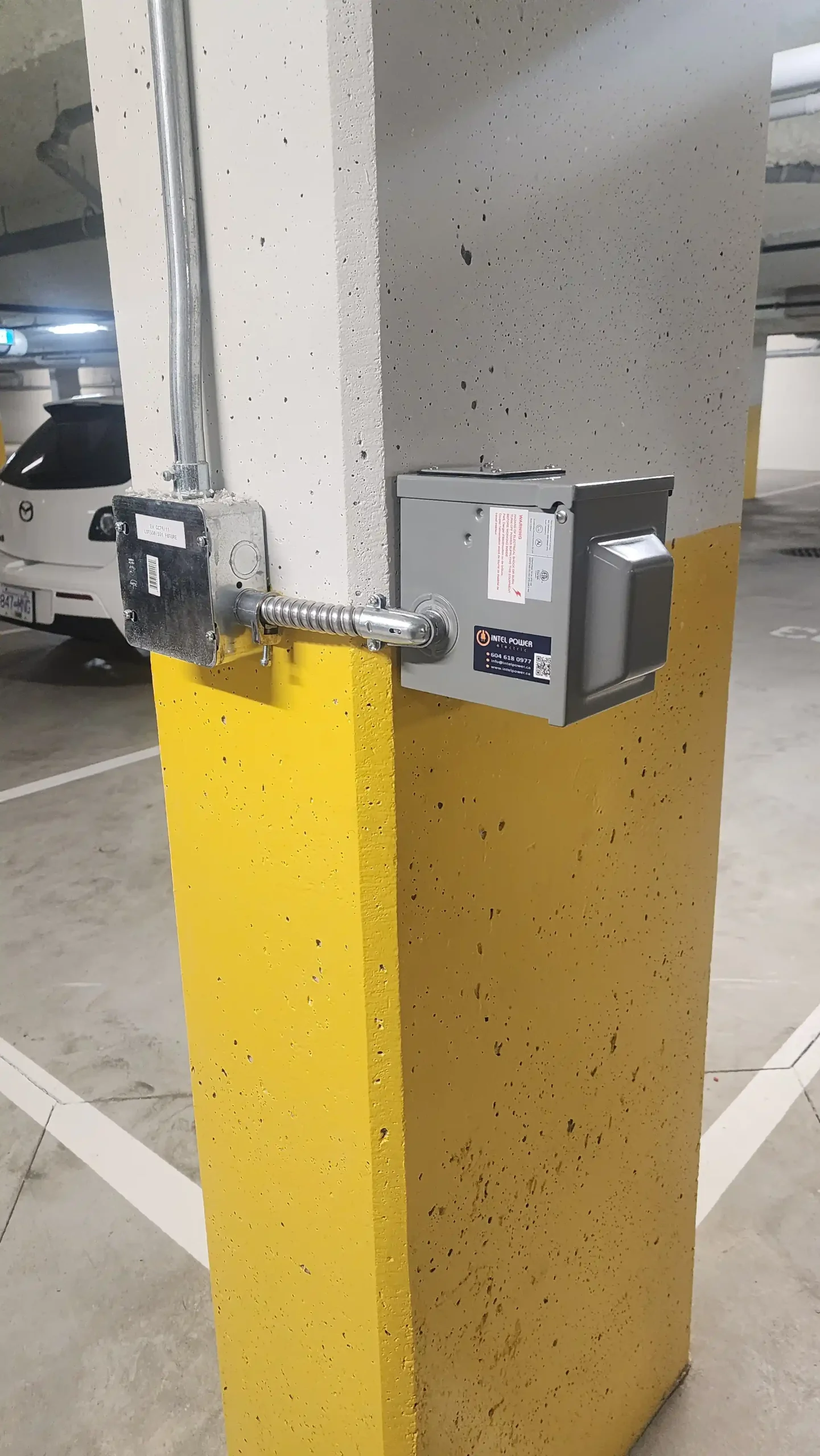
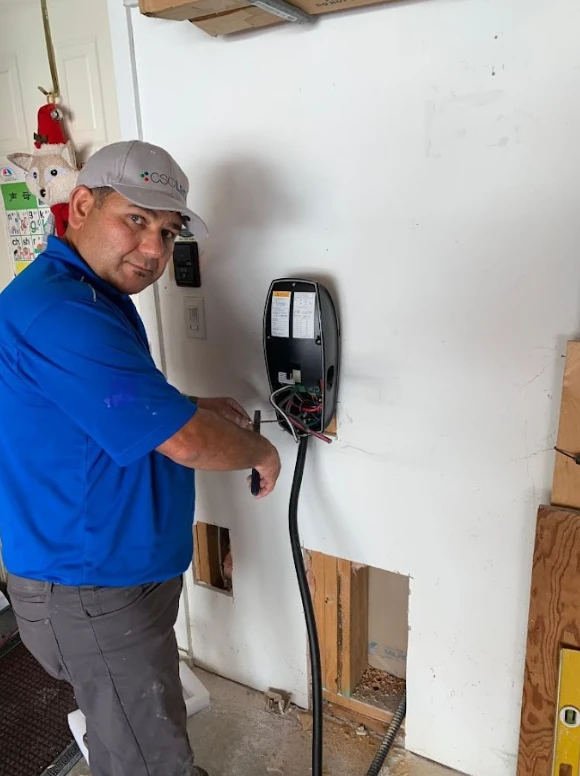
- Dedicated 240 volt circuit. Correctly sized copper wiring, a matching breaker, and conduit wherever the run is exposed or outdoors.
- Electrical permit and inspection. We take out the permit with Technical Safety BC or your municipality, depending on your address, and arrange the inspection.
- Testing and handover. We test the circuit, confirm the charger and vehicle are communicating properly, and show you how to set charging schedules in the app.
Level 1, Level 2 or DC Fast: Which EV Charger Fits Your Home?
Level 1 Charging on a Standard Outlet
Most electric vehicles come with a cord that plugs into a regular 120 volt outlet. It adds roughly 6 to 9 km of range per hour, which can be enough for a plug-in hybrid or a short daily commute. The problem is that older garage outlets are often shared with lights, a freezer or a workshop, and they were never meant to carry a heavy load all night. If you plan to rely on Level 1 charging, ask us to check that outlet first.
Level 2 Charging for Most Homes
A Level 2 home EV charger runs on 240 volts. A common 32 amp unit delivers about 7.7 kW, which adds roughly 40 to 50 km of range per hour depending on the vehicle. For most drivers that means a full battery by morning no matter how far they drove the day before. This is the installation we do most often in houses, townhouses and condo parkades.
DC Fast Charging
DC fast chargers are what you find at highway and public charging sites. They need a large three phase electrical service and serious infrastructure, so they are not practical for a house. For commercial properties and fleets, we can assess whether the existing service can support fast charging or whether networked Level 2 stations are the better fit.
How Many Amps Does Your EV Charger Need?
The Canadian Electrical Code treats EV charging as a continuous load, so the circuit has to be rated at 125 percent of the charger’s output. In practice, a 32 amp charger goes on a 40 amp circuit, a 40 amp charger on a 50 amp circuit and a 48 amp charger on a 60 amp circuit. A bigger charger is not automatically better. If your vehicle’s onboard charger tops out at 7.2 kW, a 48 amp unit will not charge it any faster, and it uses capacity your panel may need for other things. We check your vehicle’s rating before recommending a size.
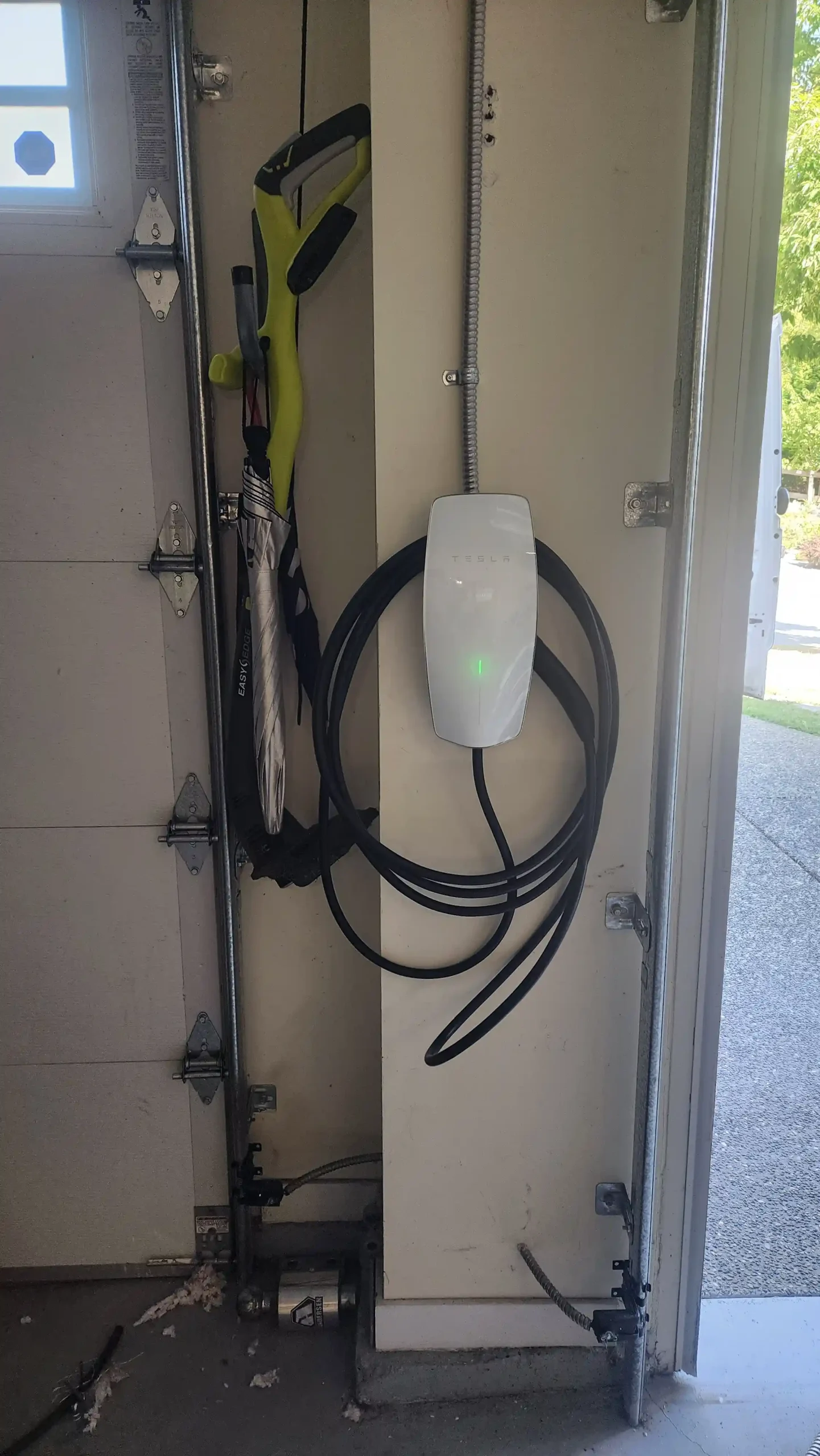
Plug-in chargers on a 240 volt outlet are allowed, but for a charger used every day we usually recommend a hardwired unit because it removes the outlet as a point of wear and heat. Keep in mind that BC Hydro does not offer a rebate for installing only a 240 volt outlet. We also install Tesla Wall Connectors, although Tesla manufactured chargers are not currently eligible for the BC Hydro rebate.
Does Your Electrical Panel Have Room for an EV Charger?
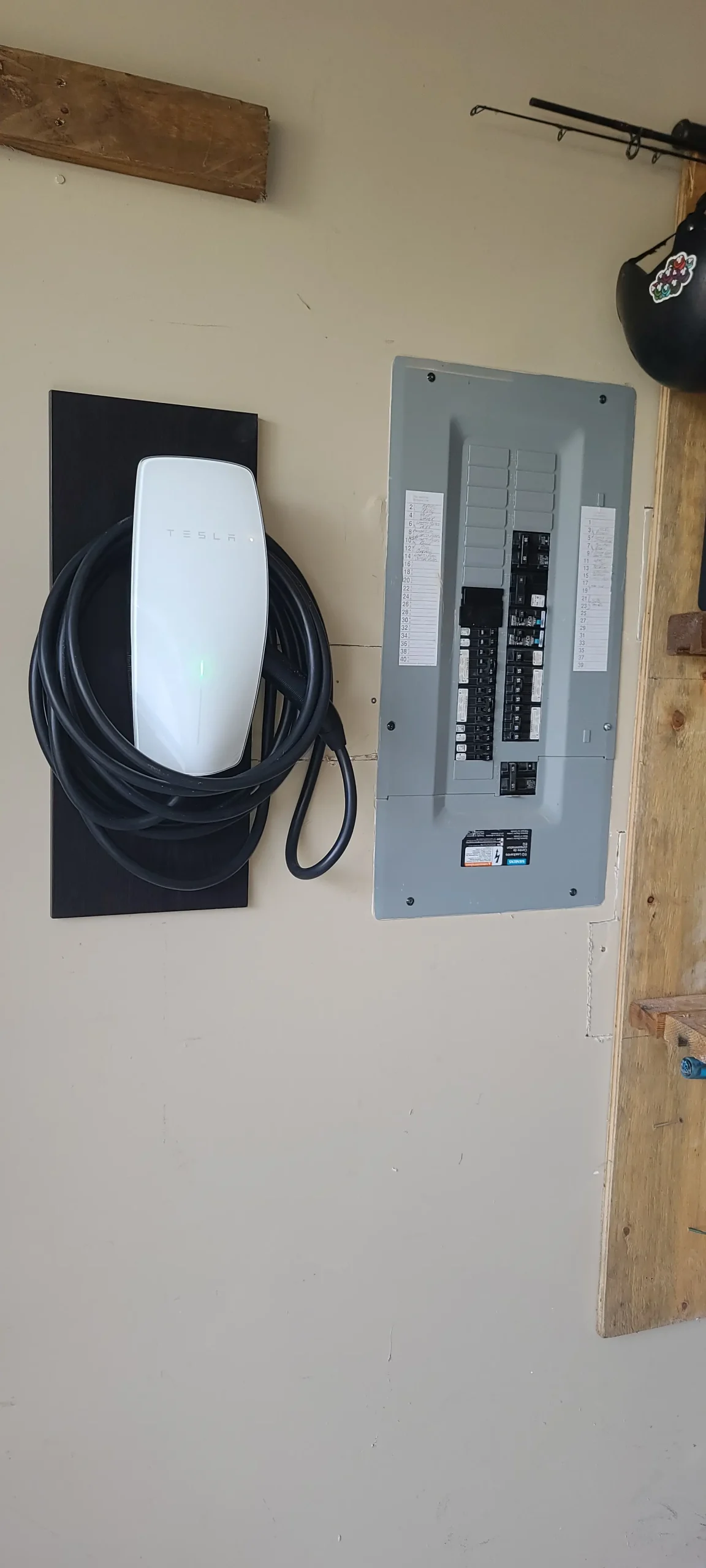
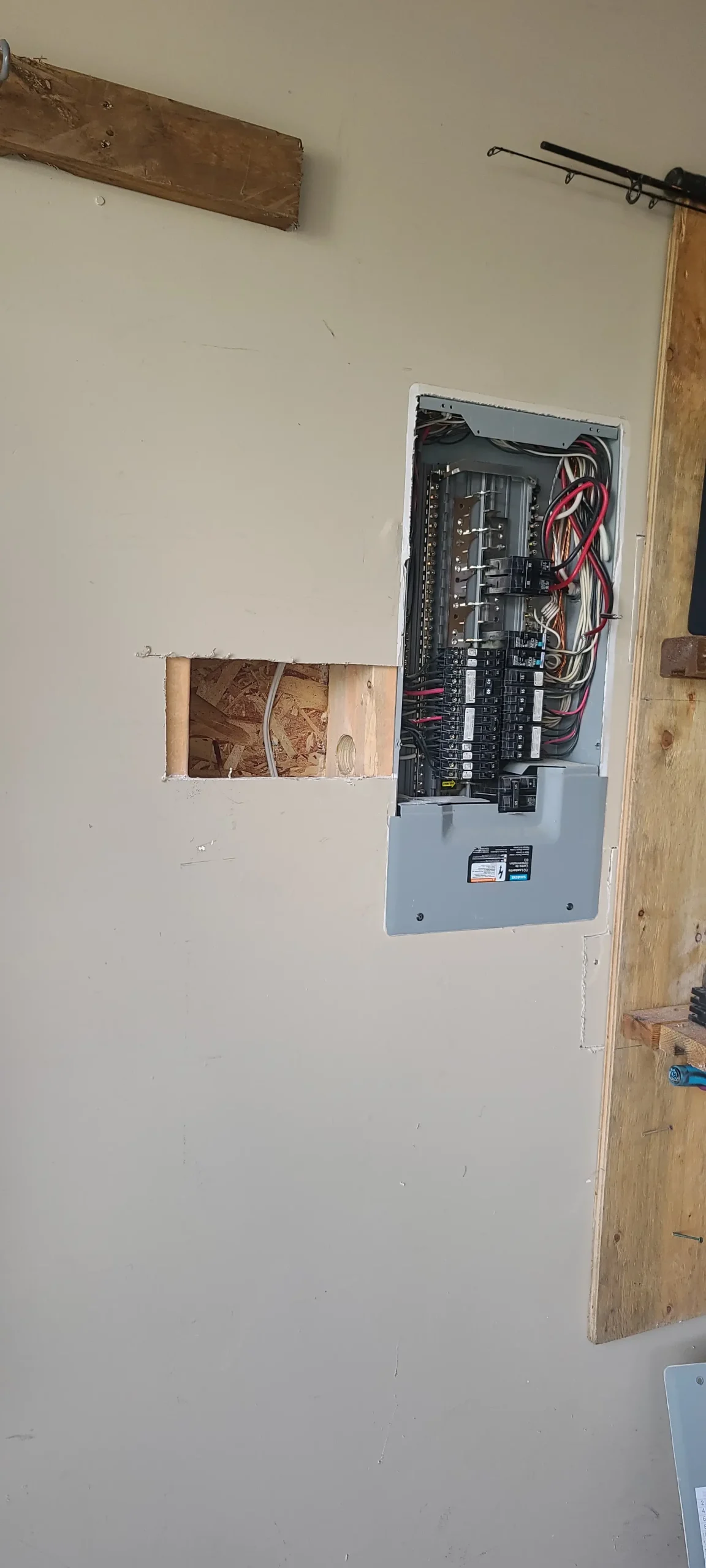
This is the question that decides most of the cost. Many older houses in Burnaby and the Tri-Cities still run on 100 amp service, while newer homes are usually built with 200 amps. A 100 amp panel does not automatically mean you need an upgrade, though. After the load calculation, your home will usually fall into one of three situations:
- Enough spare capacity. The charger goes on a new dedicated circuit, sometimes set to a lower amperage, with no other changes needed.
- Tight capacity. An EV energy management system watches your home’s total demand and slows or pauses charging when the house is drawing heavily. The electrical code allows this approach, it often avoids a service upgrade, and BC Hydro currently offers an extra rebate for it.
- Not enough capacity. When the home is already near its limit, or you are also planning a heat pump, hot tub or renovation, a panel or service upgrade is the long term answer. We coordinate that work with BC Hydro.
We will tell you which of these applies to your home before quoting. If a panel upgrade is not needed, we will not sell you one.
Learn more about our electrical panel upgrade service for EV charging and home additions.
See what changes when upgrading from a 100 amp panel to 200 amp service.
How Much Does EV Charger Installation Cost?
For a typical installed Level 2 charger in Metro Vancouver, most homeowners pay between $1,200 and $3,500 CAD, including the charger, wiring, permit and labour. The neighbourhood itself does not set the price. What matters is the kind of home that is common there: how old the electrical service is, how far the panel is from where you park, and whether the charger goes in a garage, under a carport or in a shared parkade. The table below shows the ranges we typically see across the communities we serve.
| Area and Neighbourhoods | Typical Home and Setup | What Usually Affects the Price | Estimated Installed Cost (Level 2) |
|---|---|---|---|
| Coquitlam: Burke Mountain, Westwood Plateau | Newer detached homes, usually 200 amp service with an attached garage | Short cable run and spare capacity; checking any roughed in EV circuit | $1,200 to $2,000 |
| Port Coquitlam: Dominion Triangle and newer subdivisions | Newer detached homes and townhouses with garages | Straightforward runs; strata approval for townhouses | $1,200 to $2,000 |
| Maple Ridge and Pitt Meadows | Newer detached homes with attached garages | Panel location and garage layout | $1,200 to $2,200 |
| Port Coquitlam: Mary Hill, Citadel Heights, Oxford Heights | 1970s and 1980s split levels and ranchers, often with carports | Outdoor rated charger, exterior conduit and weather tight connections | $1,500 to $2,800 |
| Port Moody: Heritage Mountain, College Park, Glenayre | Hillside homes with the panel on a different level from the parking | Longer cable runs and routing through finished spaces | $1,800 to $3,200 |
| Coquitlam: Maillardville, Austin Heights | Older detached homes with smaller panels | Load calculation, possible load management device, longer runs | $1,800 to $3,500 |
| Burnaby: Capitol Hill, Burnaby Heights | Older detached homes, many still on original 100 amp service | Limited capacity, load management, City of Burnaby permit | $1,800 to $3,500 |
| New Westminster: older character homes | Older homes and low rise buildings with dated electrical | Panel capacity and wiring routes in older construction | $1,800 to $3,500 |
| Townhouse complexes in Port Moody, Coquitlam and Port Coquitlam | Strata townhouses with individual or shared garages | Strata approval, distance to the unit’s panel, shared service capacity | $1,500 to $3,000 |
| Condo towers: Metrotown, Brentwood, Edmonds and Lougheed in Burnaby, Coquitlam City Centre, Suter Brook and Newport Village in Port Moody | Underground parkades on a shared building service | Strata approval, long parkade runs, metering and building capacity | $2,000 to $3,500, plus any building level work |
These ranges are estimates based on typical setups in each area, not fixed prices. Your final cost is confirmed after a site visit and load calculation. Panel or service upgrades, trenching to a detached garage and building wide strata work are quoted separately, and the ranges do not include any BC Hydro rebate you may receive.
Our written quotes list the charger, labour, materials and permit as separate line items. That way you can compare quotes fairly, and you already have the itemized invoice BC Hydro asks for when you apply for a rebate.
Read our detailed breakdown of EV charger installation cost in Metro Vancouver for 2026.
Our written quotes list the charger, labour, materials and permit as separate line items. That way you can compare quotes fairly, and you already have the itemized invoice BC Hydro asks for when you apply for a rebate.
BC Hydro EV Charger Rebates in 2026
The provincial EV charger rebate program is funded by the Province of BC and administered by BC Hydro. FortisBC electricity customers apply through FortisBC instead. As of October 2026, the main offers are:
- Single family homes, row homes and duplexes. Up to 50 percent of the charger purchase and installation cost, to a maximum of $350.
- EV power management device top up. An additional $200 when you install an eligible power management device with a Level 2 charger.
- Peak Saver enrolment. A $250 bill credit for enrolling an eligible smart charger, plus a $50 reward for each season you stay enrolled.
- Condos, apartments and townhome complexes with five or more units. Up to $2,000 per networked Level 2 charger, up to 50 percent of costs, to a maximum of $14,000 per complex. Pre-approval is required before any work starts.
- Workplaces. Up to $2,000 per networked Level 2 charger for employee use, to a maximum of $14,000 per workplace, also with pre-approval.
The details that most often cost people their rebate are simple to avoid. The charger must be on BC Hydro’s eligible list, bought new rather than leased, and permanently wall mounted. Tesla manufactured chargers are not eligible. An electrical permit is required, and the application has to be submitted within 180 days of installation. Some local governments also add their own top ups, so it is worth checking what your city offers.
Rebate amounts and funding can change at any time, so we confirm the current program before you buy a charger. You can review the official terms on the BC Hydro single family home EV charger rebate page.
EV Charger Permits and Inspections: Who Issues Yours?
Every new EV charger circuit in BC needs an electrical permit, and which office issues it depends on your address. Most of the province, including Coquitlam, Port Coquitlam, Port Moody, New Westminster, Pitt Meadows and Langley, falls under Technical Safety BC. A handful of municipalities issue their own electrical permits and do their own inspections, including Burnaby, Maple Ridge, Surrey, the City and District of North Vancouver, West Vancouver and Vancouver.
We take out the permit under our contractor licence, which means the inspection record is tied to a licensed electrical contractor. That record matters when you file an insurance claim, apply for a rebate or sell your home. Skipping the permit can leave you with an installation that nobody has checked and a rebate application that will be refused.
You can confirm which authority covers your property on the Technical Safety BC electrical permit jurisdiction page.
EV Charger Installation Across Burnaby and the Tri-Cities
We used to keep a separate page for each city we serve. We brought them together here because the code requirements are the same everywhere, while the permit office, the type of home and the practical obstacles are what really change. Here is what we tend to run into in each community.
EV Charger Installation in Burnaby
Burnaby is the one city in our core area that issues its own electrical permits, so Burnaby installations go through the City’s permit and inspection process rather than Technical Safety BC. That affects scheduling, and we plan for it from the first visit. Burnaby also has the widest mix of housing we work in. The condo towers around Metrotown, Brentwood, Edmonds and Lougheed usually need strata approval and a look at the building’s parkade capacity before anything is installed. Older detached homes in areas like Capitol Hill and Burnaby Heights often still have their original 100 amp service, which makes the load calculation and load management options especially important.
EV Charger Installation in Coquitlam
In Coquitlam, permits go through Technical Safety BC. Newer detached homes on Burke Mountain and Westwood Plateau usually have 200 amp service and an attached garage, which tends to make for a straightforward installation with a short cable run. Some newer homes also have a roughed in circuit or conduit for a future charger, and we check whether it was installed to code and permitted before using it. Older homes in Maillardville and Austin Heights are a different story, with smaller panels and longer wiring routes, so we spend more time on capacity planning there. City Centre condo owners near Lafarge Lake follow the strata process described below.
EV Charger Installation in Port Moody
Port Moody’s hillside streets shape a lot of installations. On Heritage Mountain, College Park and Glenayre, the parking pad or garage is often on a different level from the panel, which means longer runs and careful routing through finished spaces. The city also has a large share of townhouse complexes and condo buildings around Suter Brook, Newport Village and Klahanie, where the strata process and shared building capacity come first. Port Moody permits are issued by Technical Safety BC.
EV Charger Installation in Port Coquitlam
Port Coquitlam is our home base, so we usually reach homes in Mary Hill, Citadel Heights, Oxford Heights and the Dominion Triangle quickly for site visits and follow ups. Many Port Coquitlam homes are split levels and ranchers from the 1970s and 1980s with carports rather than enclosed garages. Those installations often call for an outdoor rated charger, weather tight connections and a thoughtful mounting spot so the cable is not lying across a walkway. Permits here are handled through Technical Safety BC.
New Westminster, Maple Ridge, Pitt Meadows and the Wider Lower Mainland
We also install home and strata EV chargers in New Westminster, Pitt Meadows, Maple Ridge, Surrey, North Vancouver and West Vancouver. New Westminster has many older character homes and low rise strata buildings, while Maple Ridge and Pitt Meadows have more newer detached homes with garages. Maple Ridge, Surrey, North Vancouver and West Vancouver issue their own electrical permits, and we handle each one directly.
EV Charging for Condos, Townhomes and Strata Buildings
Getting a charger into a strata building is easier than it used to be. Since May 2023, the Strata Property Act allows strata corporations to approve many EV charging decisions by a majority vote instead of a three quarter vote, although special levies still need three quarters. An owner can also make a formal request to install EV charging, and if the request meets the required conditions, the strata cannot unreasonably refuse it.
The electrical side is where most strata projects slow down. A building’s service is shared, so adding chargers one stall at a time without a plan can use up capacity quickly. We help owners and councils with the technical details a request needs, and with building wide options such as EV Ready plans, load managed charging, and metering so each resident pays for their own electricity.
Owners and councils can read the province’s guidance on EV charging rules for BC strata corporations.
Workplace and Commercial EV Charging Stations
We install networked Level 2 charging for offices, retail sites, rental buildings, light industrial properties and fleet parking. Commercial projects start with a site assessment covering the available electrical service, the distance to the parking area, trenching or surface conduit, and whether chargers need access control or payment. Because we also handle commercial and industrial electrical work, we can plan the service upgrade and the chargers as one project instead of two.
Explore our commercial electrical services for workplaces and business properties.
Our EV Charger Installation Process
- Tell us about your home and vehicle. Call us or send a request with photos of your electrical panel and your parking spot. That alone tells us a lot.
- Site visit and load calculation. We confirm panel capacity, the cable route and the best mounting location.
- Written, itemized quote. Charger, materials, labour and permit are listed separately, along with any panel or load management work.
- Permit. We apply to Technical Safety BC or your municipality.
- Installation. Most straightforward home installations are finished in a single visit.
- Inspection. The work is inspected by the permit authority.
- Handover and rebate paperwork. We show you how to use the charger and give you the permit number and itemized invoice you need for your BC Hydro application.
Why Homeowners in the Tri-Cities Choose Intel Power
Intel Power Electric was founded in 2005 by BCIT trained electrician Navid Sadeghi and has grown into a full service electrical contractor for homes, businesses and industrial sites. We are licensed, bonded and insured, carry WCB coverage and are BBB accredited. Because we offer 24/7 service, we are reachable if something ever goes wrong with your charger or the circuit feeding it.
Just as important, we will tell you plainly what your home needs. Sometimes that means a smaller charger instead of a bigger one, or a load management device instead of a new panel. A good installation fits your home, your vehicle and your budget, not the most expensive option on the shelf.
After Installation: Keeping Your EV Charger Safe
A properly installed charger needs very little attention. Check the cable and plug for cuts, cracks or crushed sections, keep the connector in its holster when not in use, and never run a charger through an extension cord. Stop using the charger and call an electrician if the plug or outlet feels hot, you notice a burning smell or discolouration, or the breaker trips repeatedly.
Book Your EV Charger Installation Assessment
The fastest way to get an accurate answer is to call us at (604) 618-0977 or send us photos of your electrical panel and the spot where you park. We will tell you what your home can support, what it will cost and which rebates apply, before any work begins.