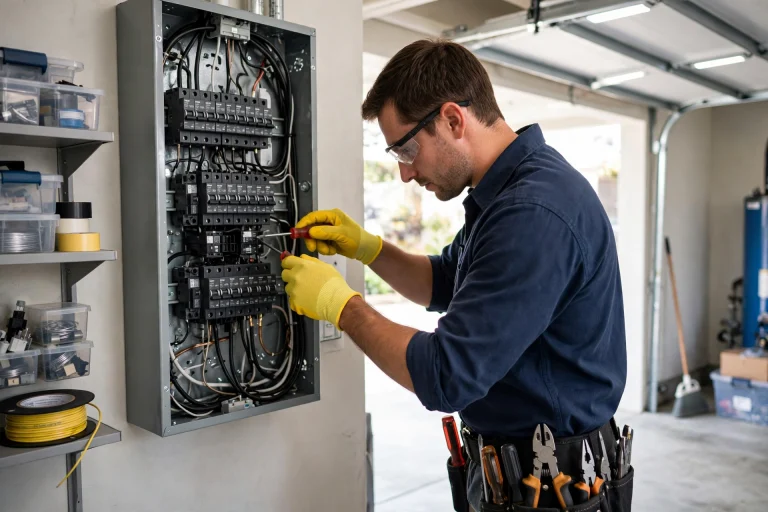
If your Coquitlam, Port Coquitlam or Port Moody home was built between the mid-1960s and the late 1970s, there is a real chance the wires behind your walls are aluminium, not copper. That alone is not a reason to panic — aluminium wiring was code-approved when it was installed and remains a permitted wiring method under the Canadian Electrical Code. But it does change how your home’s electrical system should be looked after, because the risk is not the wire itself. It is the connections.
Many older Tri-Cities homes — the ranchers and split-levels of Austin Heights and Maillardville, the 1970s streets of Port Coquitlam, the older pockets of Port Moody — were built during the years aluminium branch-circuit wiring was widely used. If you own one of these homes, or you are thinking of buying one, it is worth knowing what aluminium wiring is, how to tell whether you have it, what can go wrong, and what your options are.
Why Was Aluminium Wiring Used in the First Place?
In the mid-1960s, the price of copper rose sharply, and builders across Canada turned to aluminium as a cheaper alternative for the branch circuits that run from the panel to outlets, switches and light fixtures. It was used in a large share of Canadian homes built roughly from 1965 to the late 1970s, and the Electrical Safety Authority notes that homes built in that window may have aluminium wiring.
It is important to separate two very different uses of aluminium in a house. Heavy aluminium conductors are still specified today for service-entrance cables and feeders — the large cables that bring power into your panel. That use was never the problem. This article is about the other use: solid aluminium branch-circuit conductors, the lighter wires that feed your everyday outlets and lights. Those are the circuits where problems develop.
Why the Connections Are the Problem
Aluminium behaves differently from copper in three ways that matter at a connection point.
First, aluminium expands and contracts more than copper as it heats up and cools down with use. Over years of daily load cycles, this movement — often called creep or cold flow — can loosen a connection that was tight when it was made.
Second, aluminium oxidises quickly when exposed to air. The thin oxide layer that forms on the surface adds electrical resistance at the connection, and resistance creates heat.
Third, aluminium and copper expand at different rates, so a connection that joins the two metals directly will work itself loose over time unless it uses a connector specifically listed for the job.
A loose, oxidised or incompatible connection can overheat, arc and damage the outlet, switch or junction box around it — and in the worst case, ignite surrounding material. That is why every recognised fix for aluminium wiring is a fix to the connections, not to the wire itself.
A related point is worth knowing before anyone touches your system: standard outlets and switches marked CU-only are not acceptable on aluminium branch circuits. The Canadian Electrical Code requires aluminium conductors to be terminated only in devices and connectors specifically listed for aluminium use. This is one of the most common defects found in older Tri-Cities homes — a previous owner or handyman replaced an outlet with an ordinary copper-only device, creating exactly the kind of connection that overheats.
How to Tell If Your Home Has Aluminium Wiring
A build date is a strong clue, not a verdict. If your home was built between the mid-1960s and the late 1970s, aluminium branch wiring is likely. But houses get partly rewired: kitchens get renovated, basements get finished, additions get built, and circuits get replaced in copper one project at a time. A 1972 rancher in Port Coquitlam may have aluminium wiring in the bedrooms and copper in a renovated kitchen. Only an inspection of the actual circuits tells you what you have.
There are a few ways to get that answer:
Check your home inspection report. If you bought the home recently, the inspector should have noted the wiring type — it is a standard item in a pre-purchase inspection.
Look for the marking on the cable. Where wiring is visible — in an unfinished basement, an attic or at the panel — aluminium cable is usually marked “AL”, “ALUM” or “ALUMINUM” on its outer jacket. Do not open your panel or remove cover plates to go looking for this; that is work for a licensed electrician.
Ask a licensed electrician to confirm it. A proper assessment maps the circuits room by room and checks the devices and terminations. That written assessment is also the document your insurer or a future buyer will want to see.
Warning Signs That Need Attention
Aluminium wiring that has been properly terminated can run safely for decades. But if connections have loosened or the wrong devices were installed, the system will usually give you warnings first. Call a licensed electrician promptly if you notice any of these:
- Outlets or switch plates that feel warm to the touch
- Lights that flicker or dim for no clear reason
- A burning smell, or scorch marks or discolouration around an outlet or switch
- Outlets that work intermittently, or plugs that feel loose in the socket
- Breakers that trip again and again on the same circuit
- Sparking, buzzing or crackling sounds at an outlet or switch
If you smell burning or see sparking, stop using that outlet or circuit, switch the breaker off if you can do so safely, and call an electrician the same day. Do not replace the device yourself — a CU-only replacement on an aluminium circuit makes the risk worse, not better.
What the Canadian Electrical Code Actually Says
There is a lot of confusion about this, so it is worth stating plainly: aluminium wiring is not banned, and the Canadian Electrical Code does not require you to remove it. What the Code requires is proper termination — aluminium conductors connected only with devices and connectors listed for aluminium use, installed to the manufacturer’s instructions, and torqued to the specified value.
The BC Electrical Code is the Canadian Electrical Code as adopted in British Columbia under the Electrical Safety Regulation (B.C. Reg. 100/2004). That regulation also sets the permit and inspection rules for electrical work in the province: most work that alters fixed wiring needs an electrical installation permit, and the work must be inspected before it is concealed or connected to the power supply. In Coquitlam, Port Coquitlam and Port Moody, electrical permits are issued through Technical Safety BC, which administers the Safety Standards Act across most of the province.
A homeowner permit is possible in limited circumstances under section 17 of the regulation, but it comes with strict conditions — the work is limited to the homeowner’s own fully detached dwelling, and the homeowner must request an inspection promptly on completion, or within 180 days of the permit being issued. For aluminium remediation, which involves every device and connection in the home, the practical and safe route is a licensed electrical contractor who pulls the permit under their own licence and books the inspection. The permit and inspection record are also the paperwork your insurer will ask for.
Your Options: From Assessment to Full Rewire
The right option depends on the condition of your wiring, how many circuits are affected, whether you are renovating anyway, and what your insurer requires. These are the recognised approaches, in order from least to most invasive:
Option 1: Professional inspection and device correction
The starting point for every home. A licensed electrician inspects the system, identifies which circuits are aluminium, and corrects the straightforward defects: CU-only devices replaced with CO/ALR-rated devices or approved connectors, loose connections re-torqued to the manufacturer’s specification, and antioxidant compound applied where the device listing calls for it. This is appropriate when the wiring itself is in good condition and the problems are limited to the terminations.
Option 2: Pigtailing with approved connectors
Pigtailing is the most commonly used remediation method in British Columbia. At each device box, the electrician joins a short copper wire to the aluminium conductor with a connector listed for aluminium-to-copper splicing — the best-known is the AlumiConn connector — then connects the copper pigtail to the outlet or switch. It involves no drywall work and is accepted by most insurers when documented with a permit and inspection record.
Option 3: COPALUM crimp system
COPALUM uses a specialised crimp tool to cold-weld a copper pigtail directly onto the aluminium wire, creating a permanent connection. It is a recognised and durable method, but it requires specific tooling and training, so fewer contractors offer it, and it is generally priced as a premium option.
Option 4: Full copper rewire
Replacing all aluminium branch wiring with copper is the permanent, long-term fix. It is the right call when you are already opening walls for a renovation, a basement suite or a heat-pump conversion — the marginal cost of new wiring drops sharply when the walls are open anyway — or when the existing wiring is in poor condition across many circuits. A full rewire is permitted through Technical Safety BC and inspected at rough-in and on completion, and it removes the aluminium question entirely for insurers and future buyers.
| Option | How invasive | When it fits best |
|---|---|---|
| Inspection and device correction | Minimal — devices only | Wiring in good condition, defects limited to terminations |
| Pigtailing with approved connectors | Low — devices only, no drywall | Most homes with accessible devices; the standard remediation |
| COPALUM crimp system | Low — devices only | Homeowners wanting a permanent crimped connection |
| Full copper rewire | High — walls opened | Major renovation, or wiring in poor condition across many circuits |
One thing to note: there is no recognised “quick fix” for aluminium wiring. Wire nuts not listed for aluminium-to-copper connections, twisting copper and aluminium together, or simply replacing outlets with ordinary devices are not accepted methods, and they can make the situation worse. Whatever option you choose, it should be done under permit, by a licensed electrician, with the work inspected and documented.
Insurance, Resale and Disclosure
Aluminium wiring is one of the first things a home insurer asks about on a house built before 1980. Some insurers will cover a home with aluminium wiring without conditions; others ask for proof of remediation by a licensed electrician, charge a higher premium, or decline coverage until the work is done. Ask your own insurer what they require — and keep the permit, inspection record and remediation letter from your electrician, because that documentation is what turns a conversation about risk into a closed file.
The same applies when you sell. Aluminium wiring must be disclosed, and a buyer will almost always ask for it to be assessed. A home with documented, permitted remediation sells far more smoothly than one where the wiring is an open question. If you are buying a Tri-Cities home from the aluminium era, a pre-purchase electrical assessment is cheap due diligence — it tells you whether you are looking at a straightforward pigtailing job or a full rewire, before you commit.
When to Call a Licensed Electrician
If your home was built between the mid-1960s and the late 1970s and you have never had the wiring assessed, that assessment is the right first step — before a renovation, before a sale, and certainly before you add a heavy new load such as a heat pump or an EV charger to circuits that may already be marginal. If you have noticed any of the warning signs above, do not wait. Warm outlets, flickering lights and burning smells are the system telling you a connection is failing.
Intel Power Electric provides home electrical services across the Tri-Cities, including aluminium wiring assessments, pigtailing and full rewires, all permitted through Technical Safety BC and inspected on completion. If you are in Coquitlam, our electrician in Coquitlam team can map your circuits, check every termination, and give you a clear written picture of what you have and what it needs — so you can decide with facts instead of guesswork.
Frequently Asked Questions
Is aluminium wiring dangerous?
Aluminium wiring itself is not inherently dangerous, and it remains a permitted wiring method under the Canadian Electrical Code. The risk is at the connections: aluminium expands and contracts more than copper, oxidises at the surface, and loosens over time if terminated on devices not listed for aluminium use. Properly terminated and inspected, aluminium circuits can run safely; unremediated connections with the wrong devices are a documented fire risk.
Do I have to replace all the aluminium wiring in my home?
No. The Canadian Electrical Code does not require aluminium wiring to be removed. It requires proper termination with listed aluminium-rated devices or approved connectors. Most homeowners choose remediation — pigtailing with approved connectors at each device — rather than a full rewire, unless they are renovating or the wiring is in poor condition.
How do I know if my Tri-Cities home has aluminium wiring?
The strongest clue is the build date: homes built roughly from the mid-1960s to the late 1970s commonly have aluminium branch circuits. Check your home inspection report, or look for “AL”, “ALUM” or “ALUMINUM” printed on the cable jacket where wiring is visible. A licensed electrician can confirm it by inspecting the panel and devices — and that written assessment is also what your insurer will want.
What is pigtailing, and is it accepted by insurers?
Pigtailing joins a short copper wire to the aluminium conductor at each device box, using a connector listed for aluminium-to-copper splicing such as AlumiConn, so no aluminium ever touches a copper-only device. It is the most commonly used remediation method in British Columbia, done under permit with inspection, and most insurers accept it when documented with the permit and inspection record.
Do I need a permit for aluminium wiring remediation in Coquitlam, Port Coquitlam or Port Moody?
Yes. Work that alters fixed wiring requires an electrical installation permit, and in the Tri-Cities those permits are issued through Technical Safety BC. The work must be inspected before it is concealed or connected to the power supply. A licensed electrical contractor pulls the permit and books the inspection — and the resulting records are the documentation your insurer and any future buyer will ask for.
Sources
- Electrical Safety Regulation, B.C. Reg. 100/2004 (current to November 10, 2026), sections 17, 19 and 20 — homeowner permits, inspection of electrical work, and adoption of the Canadian Electrical Code as the B.C. Electrical Code.
- Electrical Safety Authority homeowner guidance on aluminium wiring: homes built between the mid-1960s and the late 1970s may have aluminium wiring; aluminium remains widely used for larger feeders, and the hazard is at the terminations.
- Canadian Electrical Code requirements for aluminium conductors: termination only in devices and connectors specifically listed for aluminium use; standard CU-only devices are not acceptable on aluminium branch circuits.