A small blue spark the instant you plug in a phone charger can be perfectly normal. A shower of orange sparks, a popping sound, or a spark that happens when nothing is being plugged in is your home asking for help. Telling the two apart matters, because one is harmless physics and the other is how electrical fires start. This guide explains why outlets spark, which sparks are dangerous, and the exact steps to take in a Coquitlam, Port Coquitlam or Port Moody home before you call an emergency electrician in the Tri-Cities.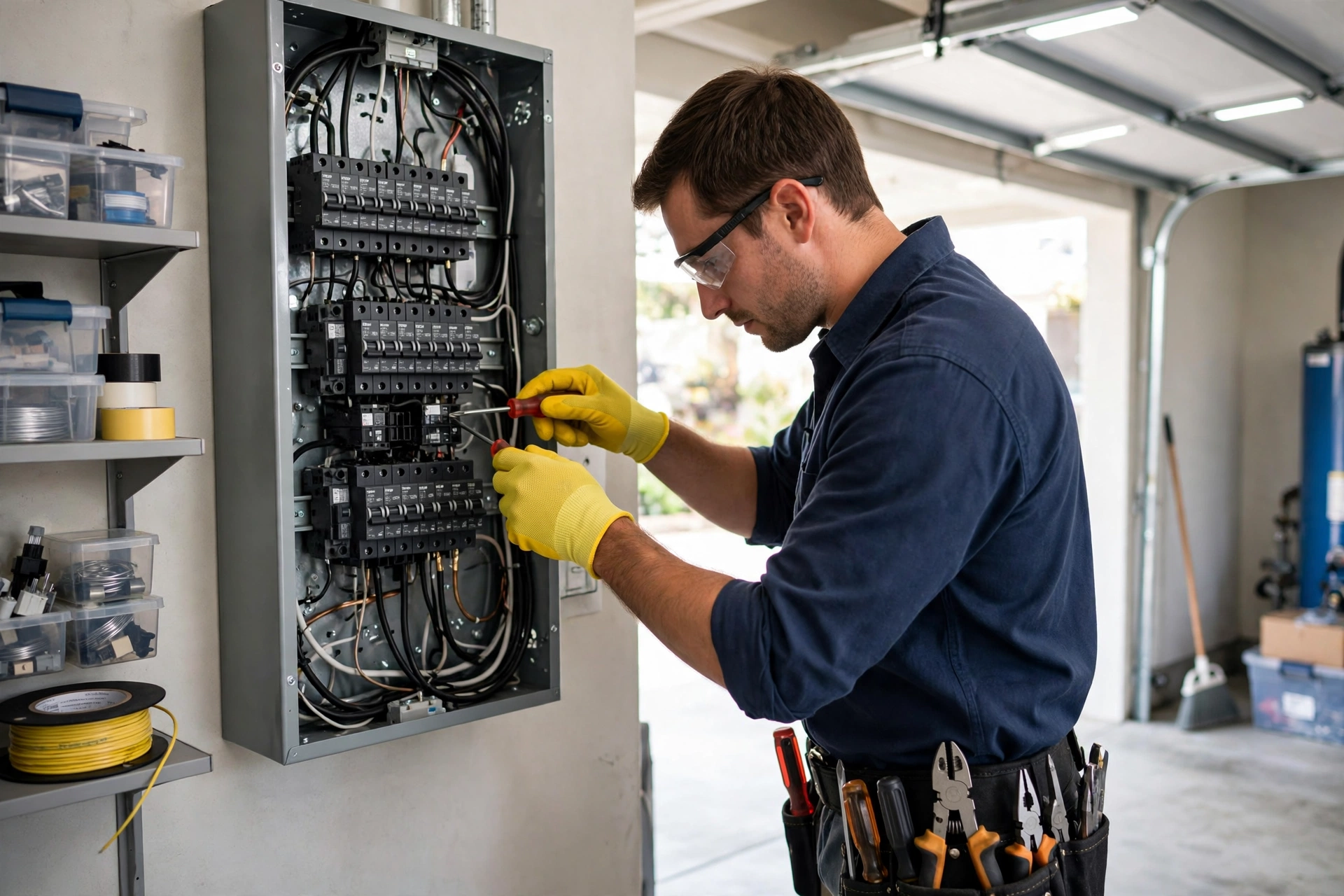
Why outlets spark at all
Electricity wants to complete a circuit. When you push a plug toward a live outlet, the current can jump the last fraction of a millimetre of air just before the prongs make contact. That tiny jump is a spark. Appliances that draw power the moment they are plugged in — chargers, computers, anything with a motor or a heating element — produce this small spark more often, because the circuit is already “hungry” when the connection is made.
A normal spark has a very specific profile:
- It is small, blue or white, and lasts a fraction of a second
- It happens only at the moment of plugging in or unplugging
- There is no sound, no smell, and no mark left on the outlet or plug
- The outlet is not warm, discoloured or loose
Anything outside that profile deserves attention.
Sparks that are NOT normal
| What you see | Likely cause | How urgent |
|---|---|---|
| Large yellow or orange sparks | Loose or worn contacts inside the outlet | Stop using it; book an electrician |
| Sparks when nothing is plugged in | Short circuit or damaged wiring | Urgent — switch off the breaker |
| Popping or crackling sounds | Arcing inside the outlet or wall | Urgent — switch off the breaker |
| Sparks plus a burning smell | Overheating insulation or connections | Emergency — see the steps below |
| Spark every single time, getting bigger | Worn-out receptacle | Replace the outlet promptly |
| Sparks from a bathroom/kitchen outlet | Water ingress or a failed GFCI | Stop using it; call an electrician |
Three causes account for most dangerous sparking in Tri-Cities homes:
Worn-out outlets. The contacts inside a receptacle grip the plug prongs with spring tension. After years of use — or decades, in the many 1960s and 1970s homes across Port Coquitlam and Coquitlam — that grip loosens. A loose connection means arcing, and arcing means heat.
Loose wiring. A wire that was not tightened properly on its terminal screw, or that has worked loose over time, creates the same problem one step deeper. Backstabbed connections (wires pushed into the back of the outlet instead of wrapped around screws) are a common culprit in production-built homes.
Overload and short circuits. A damaged cord, a failing appliance, or wires whose insulation has degraded can draw far more current than the circuit was designed for. The spark you see is the visible edge of that fault. If the same circuit also produces a burning smell coming from an outlet or panel, treat it as an emergency, not a curiosity.
What to do the moment an outlet sparks badly
- Do not keep plugging things in to “test” it. Every test is another arc.
- Unplug the appliance by the plug, not the cord — and only if you can do it without touching anything sparking, hot or wet. If in doubt, skip this step.
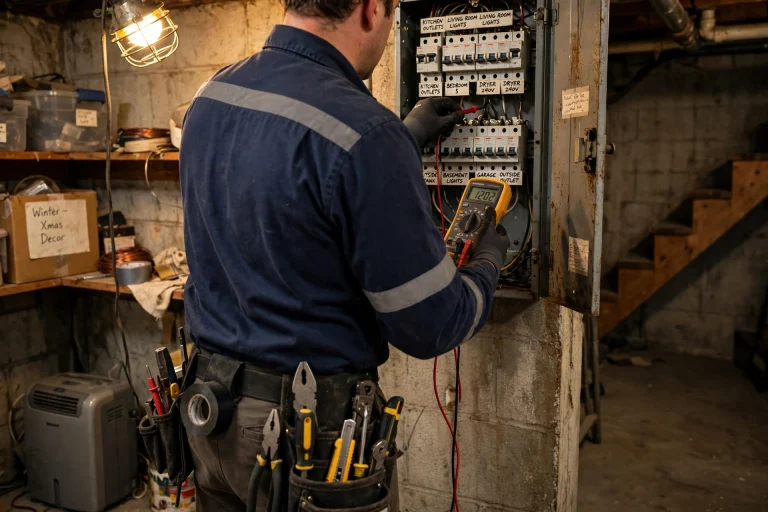
- Switch the circuit off at the breaker panel. If you do not know which breaker feeds the outlet, turn off the breakers one at a time until the outlet is dead, or use the main breaker.
- Check for heat and smell. A warm cover plate, scorch marks or a fishy/burning odour means the problem has been cooking for a while.
- Leave the breaker off and call a licensed electrician. If you see smoke, flames or active burning, call 911 first.
Do not use the outlet again until it has been inspected. Tape over it if there are children in the house.
Can you just replace the outlet yourself?
In British Columbia, homeowners can do some electrical work in their own home under a homeowner permit from Technical Safety BC, but the work must meet the BC Electrical Code and may need inspection. In practice, a sparking outlet is a symptom, not the disease: replacing the receptacle without checking the wiring, the breaker and the load on the circuit can put a shiny new outlet on top of the same fault. A licensed electrician will test the circuit, inspect the connections, check whether the outlet should be a GFCI or AFCI type for its location, and confirm the breaker is doing its job. For anything involving the panel, permits and a licensed contractor are required.
How to prevent sparking outlets
- Replace outlets that feel loose — plugs should sit snugly, not sag
- Never force a plug in, and replace cords with damaged prongs immediately
- Keep outlets in kitchens, bathrooms, laundry rooms and outdoors GFCI-protected, and test them with the built-in test button monthly
- Spread heavy loads (space heaters, kettles, hair dryers) across different circuits
- Have older wiring inspected — homes with original 1960s–1980s wiring benefit most
If an outlet in your home is sparking, warm, buzzing or discoloured, Intel Power Electric can inspect it and the circuit behind it as part of our residential electrical services across Coquitlam, Port Coquitlam, Port Moody, Vancouver and Burnaby.
Frequently asked questions
Is a small spark when plugging in a charger normal?
Yes. A tiny blue spark at the exact moment of plugging in a device that draws power immediately is normal and harmless. Size, colour, sound and smell are what separate normal from dangerous.
Why does my outlet spark when I unplug things?
Unplugging under load breaks the circuit while current is still flowing, which can arc briefly. Switch appliances off before unplugging them to reduce it. Frequent or large sparks on unplugging still point to a worn outlet.
Can a sparking outlet start a fire?
Yes. Arcing generates intense local heat, and repeated arcing can ignite dust, insulation or the outlet’s own plastic. That is why sparking paired with heat, smell or scorch marks is treated as an emergency.
What does it mean if the outlet sparks with nothing plugged in?
That suggests a short circuit or damaged wiring inside the wall or the receptacle itself. Turn the breaker off and call an electrician — do not use the outlet.
Should a sparking outlet be GFCI or AFCI protected?
Modern code requires GFCI protection in wet locations and AFCI protection in many living areas, because AFCIs are designed to detect exactly the kind of arcing described here. An electrician can confirm what your home needs.
Sources
- Technical Safety BC — electrical safety and homeowner permit guidance: https://www.technicalsafetybc.ca
- Electrical Safety Foundation International — receptacle and arcing safety resources: https://www.esfi.org
- BC Electrical Code (CSA C22.1) — requirements for receptacles, GFCI and AFCI protection