Electric vehicles are becoming a normal part of daily life, which means home and commercial charging is more common than ever. Most drivers expect charging to be simple. Plug in, wait, and go. But when an EV charger starts getting too hot, that simple routine can quickly turn into a safety concern.
A little warmth during charging is normal. Electrical equipment naturally produces heat when power moves through wires, connectors, and internal components. Overheating is different. When the charger, plug, cable, or outlet becomes hotter than it should, it may point to a wiring problem, a failing part, poor installation, or an issue with the charging setup itself.
Ignoring the problem is risky. An overheating EV charger can reduce charging performance, damage equipment, trip breakers, shorten the life of your charger, and in serious cases create a fire hazard. The good news is that the warning signs are often easy to spot if you know what to look for.
If you are dealing with an overheating EV charger, it is best to contact a qualified professional before doing anything else. For safe, reliable help, contact Intelpower today and speak with our EV charger installation specialists.
This guide explains why EV charger overheating happens, how to recognize it, what steps to take right away, and how to prevent the issue from coming back.
How EV Chargers Generate Heat During Normal Use
Before looking at overheating, it helps to understand why EV chargers produce heat in the first place.
Electricity, resistance, and temperature
Whenever electricity flows through a system, some energy is lost as heat. This happens because electrical resistance exists in wires, terminals, plugs, circuit boards, and connectors. The higher the current, the more heat can build up. That is why faster charging systems usually run warmer than slower ones.
This does not automatically mean something is wrong. A charging cable may feel slightly warm after a session. A charger body may also feel mildly warm to the touch, especially during long charging cycles. These conditions can be normal if the temperature stays within the equipment’s design range.
Why normal heat becomes overheating
Problems begin when heat cannot dissipate properly or when a fault causes the system to generate more heat than expected. A loose connection, damaged cable, undersized wire, worn-out connector, poor ventilation, or high ambient temperature can push a charger beyond normal operating conditions.
At that point, the charger may protect itself by slowing down, pausing the session, or shutting off. If no protection system intervenes, components can degrade faster and safety risks increase.
Different charger types, different heat profiles
Level 1 chargers usually run at lower power and tend to generate less heat. Level 2 chargers deliver more current and are more sensitive to wiring quality, installation standards, and connector condition. DC fast chargers handle far more power than home systems and rely heavily on advanced cooling and monitoring systems to manage heat.
No matter the charger type, excess heat is something you should never brush off.
What Causes an EV Charger to Overheat
EV charger overheating is usually not caused by one single factor. In many cases, several small issues combine to create one larger problem. To make diagnosis easier, the causes can be grouped into four main categories.
Electrical Problems
Electrical issues are one of the most common reasons a charger overheats.
Loose electrical connections
A loose terminal creates resistance. Resistance creates heat. Even a slightly loose connection at the breaker, outlet, junction point, or charger terminal can raise temperatures during charging. This is especially dangerous because the heat tends to build in one concentrated area rather than across the full system.
Undersized wiring
If the wire gauge does not match the charger’s electrical demand, the wiring may heat up under load. This often happens in older homes, rushed installations, or setups where the charger was added without upgrading the circuit properly.
Overloaded circuits
An EV charger should not compete with too many other high-demand devices on the same circuit. When the load is too high, wires and breakers can run hotter than intended. Repeated overloads may also weaken the system over time.
Voltage irregularities
Voltage drops, unstable power, or poor supply conditions can force the charging system to work harder. That stress may lead to extra heat in the charger or connected components.
Hardware and Component Failures
Even if the electrical supply is correct, the charger itself may be the source of the problem.
Damaged charging cables
A cable that is bent, crushed, frayed, or worn can create hot spots. These hot spots may not always be visible at first. Over time, repeated use and exposure can weaken insulation and internal conductors.
Worn or faulty connectors
The plug and connector are contact points that must stay clean, tight, and mechanically sound. If the connector is worn out, dirty, corroded, or damaged, resistance increases and heat builds quickly.
Internal charger failure
Inside the charging unit, relays, control boards, sensors, and power electronics can fail or degrade. When internal components no longer work efficiently, the charger may begin running hotter than normal or behave unpredictably during charging sessions.
Environmental Conditions
The surrounding environment also affects charger temperature more than many people realize.
High outdoor temperatures
If a charger is installed in a hot garage, on a sun-facing wall, or in an area with poor airflow, it may struggle to cool itself during long sessions. Even a well-installed charger can overheat more easily on very hot days.
Direct sunlight
Sun exposure can raise the temperature of the charger enclosure, plug, and cable before charging even begins. Once current starts flowing, that extra starting heat can push the equipment beyond a safe range.
Poor ventilation
Chargers need space around them. If a unit is boxed in, placed near other heat-producing equipment, or mounted in an enclosed area without proper airflow, trapped heat can become a problem.
Usage and Installation Factors
Some overheating issues come from how the charger is used rather than how it was built.
Long continuous charging sessions
Extended charging sessions generate sustained heat. If the charger is already under stress due to ambient temperature or minor electrical issues, long sessions can make the problem worse.
Incompatible equipment
Using adapters, connectors, or accessories that are not designed for your charger and vehicle can create resistance, unstable contact, or poor performance.
Poor installation practices
Improper installation remains one of the biggest causes of EV charger problems. Incorrect breaker sizing, weak terminations, poor cable routing, inadequate load calculation, and non-compliant electrical work can all contribute to overheating.

Warning Signs Your EV Charger May Be Overheating
Many overheating problems give early signals before they turn into serious failures. Knowing those signs can help you act quickly.
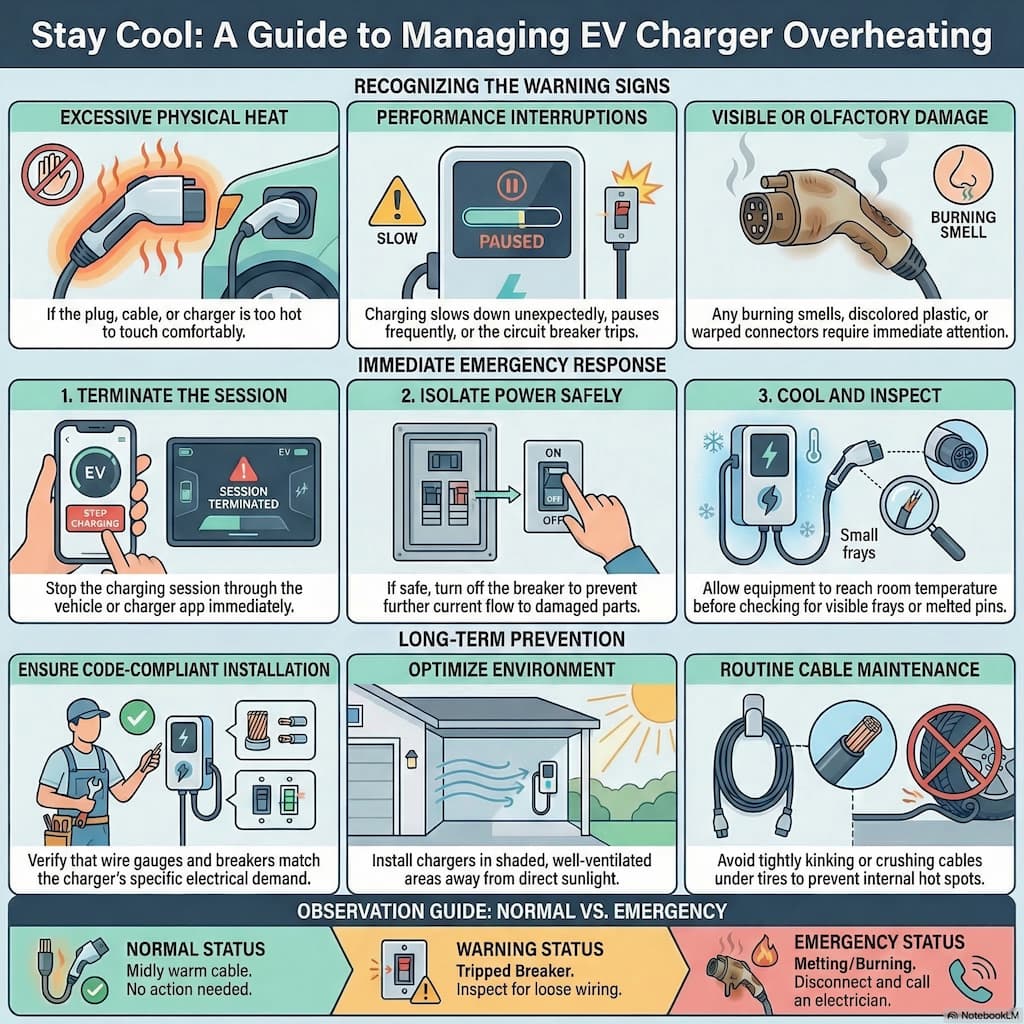
The plug or cable feels unusually hot
A slightly warm cable may be normal. A plug, connector, or cable that feels very hot to the touch is not. If you cannot comfortably touch it, the system needs attention.
Charging slows down unexpectedly
Some chargers reduce output when they detect excess heat. If charging suddenly becomes slower than usual, temperature management may be the reason.
Charging stops or pauses
Automatic shutdowns are often a protective response. The charger may pause to cool down or terminate the session entirely if it detects unsafe temperatures.
There is a burning smell
A burning or melting smell should always be treated as urgent. It may point to damaged insulation, overheated terminals, or failing internal components.
You notice discoloration or melted plastic
Dark marks, softened plastic, or visible warping around the plug, outlet, or charging port can indicate repeated overheating.
The breaker trips during charging
Frequent breaker trips can signal overcurrent, heat buildup, or a deeper electrical issue. While a trip is a safety feature, it is also a warning that something is wrong.
Why EV Charger Overheating Is Dangerous
Overheating is not just a nuisance. It can lead to real safety, financial, and operational problems.
Fire risk
This is the most serious concern. Electrical heat concentrated at a loose connection, damaged cable, or failing component can ignite surrounding materials or melt insulation.
Equipment damage
Too much heat shortens the lifespan of cables, plugs, outlets, internal electronics, and charger housings. What starts as a minor issue can turn into an expensive repair or full replacement.
Reduced charging efficiency
When systems run hot, they often become less efficient. That can lead to slower charging, more interruptions, and inconsistent performance.
Stress on the vehicle side
Although the charger is often the main problem, overheating at the connector or port can also affect the EV side of the charging connection.
Higher repair costs later
Catching a heat issue early is usually cheaper than waiting. A simple terminal tightening or cable replacement costs far less than repairing fire damage or replacing an entire charger setup.
What to Do If Your EV Charger Is Overheating
If you suspect overheating, take the situation seriously.
Step 1: Stop the charging session
End the charging session as soon as it is safe to do so. Do not continue charging just to finish topping up the battery. Continued use can make the issue worse.
Step 2: Disconnect safely
If the equipment is extremely hot, do not handle it carelessly. Follow the manufacturer’s shutdown instructions. If you smell burning, see smoke, or notice melted parts, turn off power at the breaker if it is safe to do so.
Step 3: Let the equipment cool down
Do not restart charging right away. Give the charger, cable, and connector time to cool so you can inspect them more safely.
Step 4: Look for obvious signs of damage
Check the cable, plug, charger body, outlet, and breaker area for discoloration, warping, cracking, or loose fit. Do not take apart the charger unless you are qualified to do so.
Step 5: Stop using suspect accessories
If you are using an adapter, extension device, or non-standard accessory, remove it from the setup. These add-ons are common sources of heat and poor contact.
Step 6: Call a qualified professional
If the charger overheats more than once, trips the breaker, smells burnt, or shows physical damage, a licensed electrician or EV charger specialist should inspect it before you use it again.
How Professionals Fix EV Charger Overheating
Once the source is identified, the fix depends on whether the problem lies in the wiring, the charger, the environment, or the usage pattern.
Tightening or replacing connections
Loose terminations at the breaker, disconnect, outlet, or charger terminals are often corrected by re-terminating the conductors and replacing damaged parts where needed.
Upgrading the circuit
If the wiring or breaker is undersized, the circuit may need to be redesigned to match the charger’s electrical load.
Replacing damaged cables or connectors
If the heat issue is isolated to the charging cable or connector, replacing that component may solve the problem.
Repairing or replacing the charger
When the fault is internal, the safest option may be manufacturer-approved repair or full charger replacement.
Improving installation conditions
In some cases, the charger itself is fine, but the installation location is the issue. Better ventilation, shade, spacing, or mounting conditions may help reduce operating temperature.
How to Prevent EV Charger Overheating in the Future
The best approach is to prevent heat problems before they start.
Choose the right charger for the application
Not every charger fits every home or property. The charger’s power rating, duty cycle, certification, and environmental suitability should match the location and usage.
Make sure installation is code compliant
Professional installation matters. Proper load calculation, correct wire size, suitable breaker protection, and secure terminations all reduce heat-related risk.
Inspect the charger regularly
You do not need to perform technical diagnostics yourself, but you should pay attention to how the system looks, feels, and behaves. A charger that suddenly runs hotter, sounds different, or charges inconsistently deserves inspection.
Keep cables in good condition
Do not drag charging cables, crush them under tires, leave them tightly kinked, or expose them to unnecessary wear. Store them properly when not in use.
Protect the charger from extreme conditions
If possible, install the charger in a shaded, ventilated, and dry location. Outdoor chargers should be suitable for the climate and mounting conditions.
Schedule professional maintenance when needed
For home users, occasional inspection may be enough. For commercial sites or heavy-use chargers, regular maintenance is even more important because repeated use accelerates wear.
When It Is Time to Call an Electrician
Some issues should never be handled casually.
Call a licensed electrician or EV charger professional if:
- the plug, cable, or charger becomes very hot repeatedly
- the breaker trips during charging more than once
- you notice melted plastic, dark marks, or burning smells
- charging speed drops suddenly without explanation
- the charger shuts down often
- the installation is old, modified, or you are unsure whether it was done correctly
Trying to keep using a charger with clear warning signs can turn a repairable issue into a dangerous one.
Final Thoughts
EV chargers are designed to handle real electrical demand, but they are not supposed to overheat. When heat goes beyond normal levels, it usually points to a problem that needs attention. Sometimes the fix is simple, such as a loose connection or worn cable. Other times the issue is tied to installation quality, electrical capacity, or failing components.
The important thing is not to ignore the signs. If your EV charger feels too hot, slows down unexpectedly, trips breakers, or shows visible damage, stop using it until the setup is inspected properly. Early action protects your charger, your vehicle, your property, and most importantly your safety.
Frequently Asked Questions
Is it normal for an EV charger to feel warm?
Yes. A mild amount of warmth can be normal during charging. It becomes a concern when the charger, plug, or cable feels excessively hot or begins causing interruptions.
Why does my EV charger stop charging after a while?
Some chargers automatically reduce power or shut down when they detect unsafe temperatures. This can happen when the system is overheating.
Can hot weather make my EV charger overheat?
Yes. High ambient temperatures, direct sunlight, and poor ventilation can all make overheating more likely.
Can bad wiring cause EV charger overheating?
Yes. Loose connections, undersized wires, overloaded circuits, and improper installation are common causes of excess heat.
Should I keep using an overheating EV charger?
No. If the charger is unusually hot, smells burnt, trips breakers, or shows visible damage, it should be inspected before further use.
Does fast charging create more heat?
In general, higher-power charging creates more heat because more current is moving through the system. That makes proper equipment and installation even more important.
Can a damaged cable cause overheating?
Yes. Worn, frayed, crushed, or internally damaged cables can create hot spots and unsafe conditions during charging.
How often should an EV charger be inspected?
That depends on usage. Home chargers may only need occasional checks, while commercial or high-use chargers benefit from more regular inspection and maintenance.