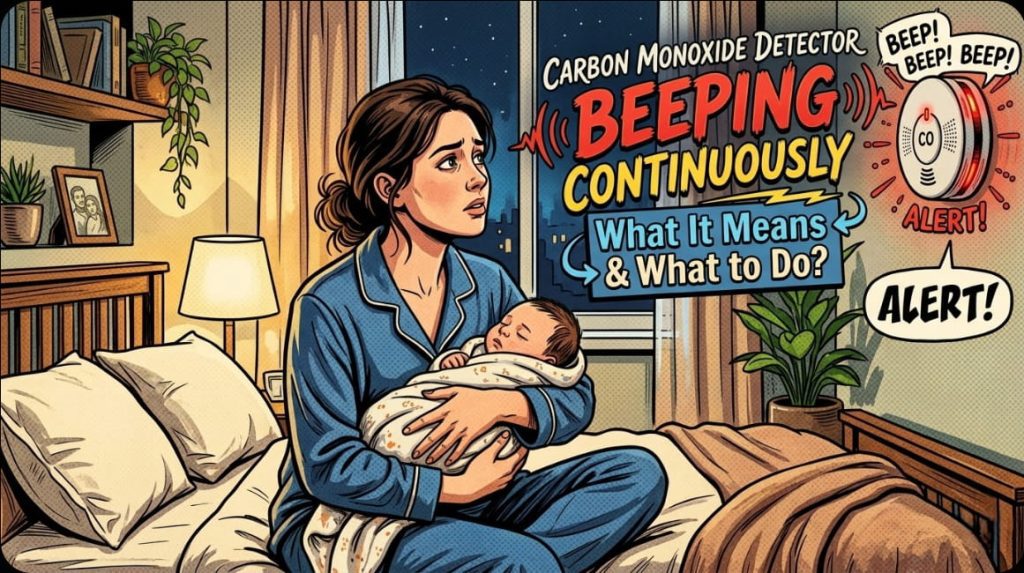
If your carbon monoxide detector is beeping continuously, do not ignore it. That sound can mean carbon monoxide is present, the battery is low, the unit has reached the end of its life, or there is a fault with the detector itself. The important part is this. Your first job is not to guess. Your first job is to stay safe, then figure out what kind of sound you are hearing.
Carbon monoxide, often called CO, is especially dangerous because you cannot see it or smell it. A detector that keeps making noise is not being annoying for sport. It is trying to tell you something. The key is learning whether it is sounding an alarm or giving a warning chirp.
What to do first when the detector keeps beeping
Start with the safest assumption. If the sound is loud, urgent, and repeating, treat it like a real carbon monoxide alarm.
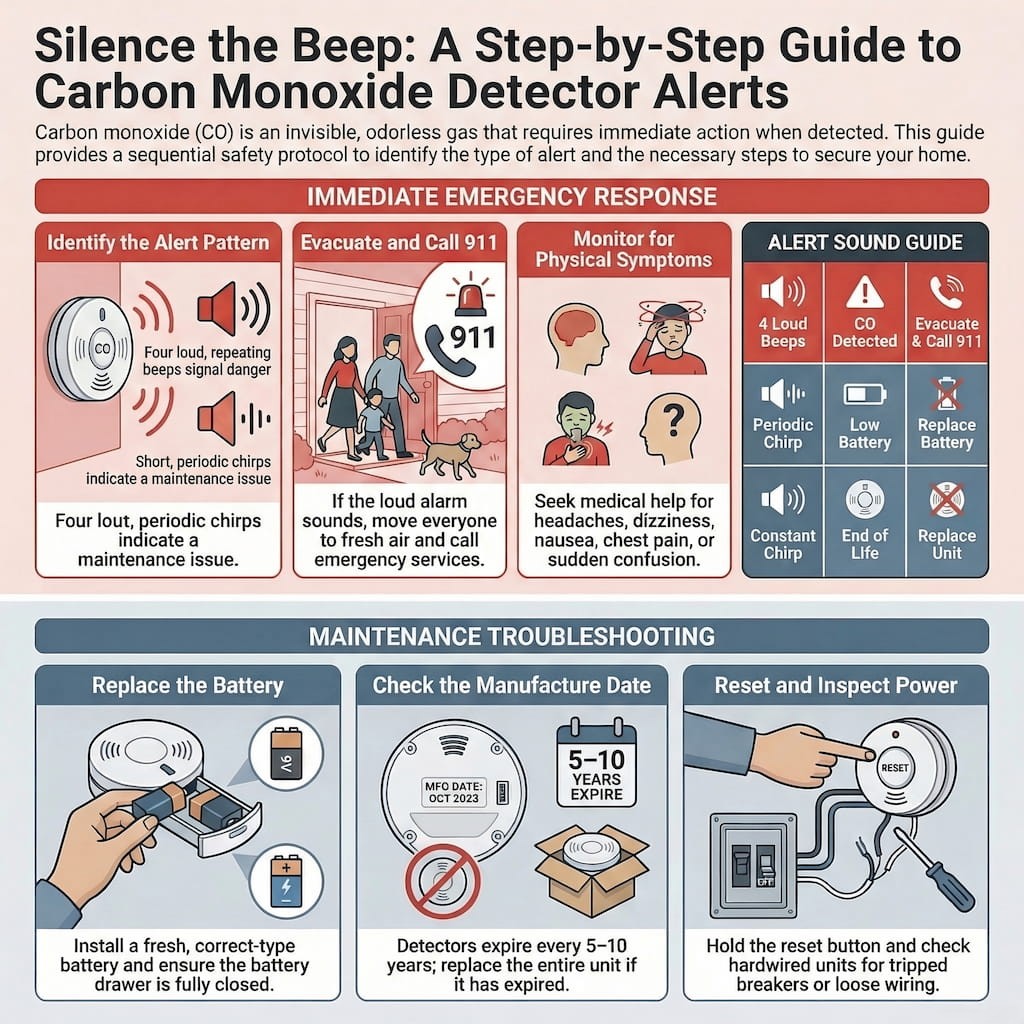
Move everyone outside or to fresh air right away. Once you are outside, call 911 or your local emergency service. Do not stay inside trying to troubleshoot the unit while the alarm may be detecting carbon monoxide. If anyone has symptoms such as headache, dizziness, weakness, nausea, vomiting, chest pain, or confusion, get medical help immediately.
That is the first fork in the road. Safety first. Diagnosis second.
If the sound is a short chirp every so often rather than a loud repeating alarm, it may be a maintenance issue instead of an active carbon monoxide emergency. In that case, you can begin checking the detector itself.
Alarm sound versus chirping sound
This is where many homeowners get tripped up. People often say their detector is beeping, but that word can describe very different sounds.
A real alarm is usually louder and repeats in a pattern meant to get your attention fast. Many common models use four loud beeps followed by a short pause when carbon monoxide is detected, but patterns vary by brand and model.
A chirp is usually shorter, quieter, and spaced farther apart. A chirping detector often points to a battery problem, end of life warning, or device fault rather than active carbon monoxide in the air.
That distinction matters. If it sounds urgent and continuous, leave first. If it sounds like an occasional chirp, check the unit.
Common reasons a carbon monoxide detector keeps beeping
1. Carbon monoxide has been detected
This is the most serious possibility. If the detector is in full alarm mode, carbon monoxide may be present in the home. Possible sources include a malfunctioning furnace, water heater, fireplace, gas stove, wood stove, or vehicle running in an attached garage.
Do not assume it is a false alarm just because you do not smell anything. Carbon monoxide has no smell. That is exactly why detectors matter.
2. The battery is low
A low battery is one of the most common reasons for chirping. Battery powered units and hardwired units with battery backup can both chirp when the battery is weak. In many models, this happens about once every minute.
If the unit uses replaceable batteries, install fresh batteries of the recommended type. Make sure they are seated properly and the battery drawer closes fully.
3. The detector has reached end of life
Carbon monoxide detectors do not last forever. Many units are designed to work for a limited number of years, often around five to ten years depending on the model. When they expire, they may chirp regularly to tell you the sensor is no longer reliable.
This is where people waste time changing the battery again and again. If the detector has reached the end of its lifespan, a new battery will not fix the issue. The unit needs to be replaced.
4. There is a power or wiring issue
Hardwired detectors can beep if they lose AC power and switch to battery backup. Loose connections, a tripped breaker, or an improperly installed backup battery can also trigger warning sounds.
If you have a hardwired unit, check whether power has been interrupted elsewhere in the home and inspect the backup battery if the model has one.
5. The detector has a fault or needs a reset
Sometimes the issue is the detector itself. A fault code, internal sensor problem, dust buildup, or incomplete reset after a battery change can cause continued chirping or warning sounds.
If you have already replaced the battery and the noise continues, check the manual for the model specific reset steps. If the detector still keeps beeping after that, replacement is usually the smartest move.
How to stop the beeping safely
Once you are confident you are not dealing with an active carbon monoxide emergency, follow a simple troubleshooting process.
First, identify the model number and check the user manual. This saves a lot of guesswork because sound patterns are not the same across all brands.
Second, replace the battery if the unit has a replaceable battery. Do not use an old battery from a drawer full of mystery objects and electrical regret. Use a new battery of the correct type.
Third, reset the detector according to the manufacturer instructions. Some units need the test or reset button held for several seconds.
Fourth, check the age of the detector. Look for a manufacture date, replace by date, or end of life marking on the back or side of the unit. If it is expired, replace it.
Fifth, inspect for power issues if the detector is hardwired. A loss of household power can trigger backup battery chirping.
If the detector keeps beeping after these steps, replace it. A carbon monoxide detector is not a gadget to negotiate with like a moody printer. When it keeps warning you, believe it.
When to call a professional
If the alarm sounds again after a reset or battery change, take it seriously. A repeated alarm may point to a real carbon monoxide source in the home.
Call a qualified HVAC technician, gas appliance technician, or licensed professional if you suspect the source may be a furnace, boiler, water heater, fireplace, gas range, or another fuel burning appliance. If you recently used a generator, space heater, or vehicle near the home, mention that too.
A detector can tell you there may be a problem. It cannot fix the appliance or venting issue causing it.
How to prevent future beeping problems
Good maintenance reduces both risk and random chirping.
Test your carbon monoxide alarms monthly. Replace batteries when needed if your model uses them. Replace the entire unit when it reaches the end of its listed lifespan. Keep fuel burning appliances inspected regularly. Make sure vents and flues are working properly. Never run a car, generator, or charcoal device in a garage, basement, or enclosed space.
It is also smart to make sure you have carbon monoxide alarms installed in the right places, especially outside sleeping areas and on each level of the home, following the manufacturer instructions and local code requirements.
Need help with smoke or carbon monoxide detectors in the Tri-Cities?
If you are in Coquitlam, Port Coquitlam, or Port Moody and need professional help with smoke alarms or carbon monoxide detectors, Intel Power Electric is here to help. Our team handles smoke detector installation, replacement, upgrades, and electrical troubleshooting for homeowners who want safer, code-conscious protection in the places that matter most.
Whether your carbon monoxide detector keeps beeping, your smoke alarm needs to be replaced, or you want to upgrade to a more reliable setup, it is smart to have a licensed electrician inspect the issue properly. A quick fix is great when it works. A proper diagnosis is even better when safety is on the line.
For professional detector services in the local Tri-Cities area, contact Intel Power Electric at (604) 618-0977 or visit our smoke detectors installation in coquitlam service page.
Final thoughts
A carbon monoxide detector beeping continuously is not something to shrug off. Sometimes the fix is as simple as a new battery. Sometimes the unit has expired. Sometimes it is warning you about a real and dangerous carbon monoxide problem.
Treat the sound as a safety issue first. Get to fresh air if the alarm sounds urgent. Then identify whether you are dealing with an alarm, a chirp, a power issue, or an expired detector. A few careful steps can protect your home, your family, and your peace of mind.
FAQs
Why is my carbon monoxide detector beeping continuously?
It may be detecting carbon monoxide, warning of a low battery, signaling end of life, or indicating a fault or power issue. Start by deciding whether it sounds like a full alarm or a periodic chirp.
Should I leave the house if my CO detector is beeping?
If the sound is loud and repeating like an alarm, yes. Move outside or to fresh air immediately and call emergency services from outside.
Will changing the battery stop the beeping?
It can if the cause is a low battery. If the detector is expired or has a fault, changing the battery may not stop the sound.
Why is my detector still beeping after I changed the battery?
The battery may be installed incorrectly, the unit may need a reset, there may be a power issue, or the detector may have reached the end of its life.
How long do carbon monoxide detectors last?
It depends on the model, but many last between five and ten years. Check the label and manual for the exact replacement timeline.
Can a hardwired carbon monoxide detector still beep because of the battery?
Yes. Many hardwired units have a backup battery. If that battery is low or loose, the unit can chirp even when it is wired into the home.
What are the most common symptoms of carbon monoxide exposure?
Common symptoms include headache, dizziness, weakness, nausea, vomiting, chest pain, and confusion. Severe exposure can become life threatening very quickly.